Brain vs. Heart: The Ultimate Countdown on Kids' Future Readiness
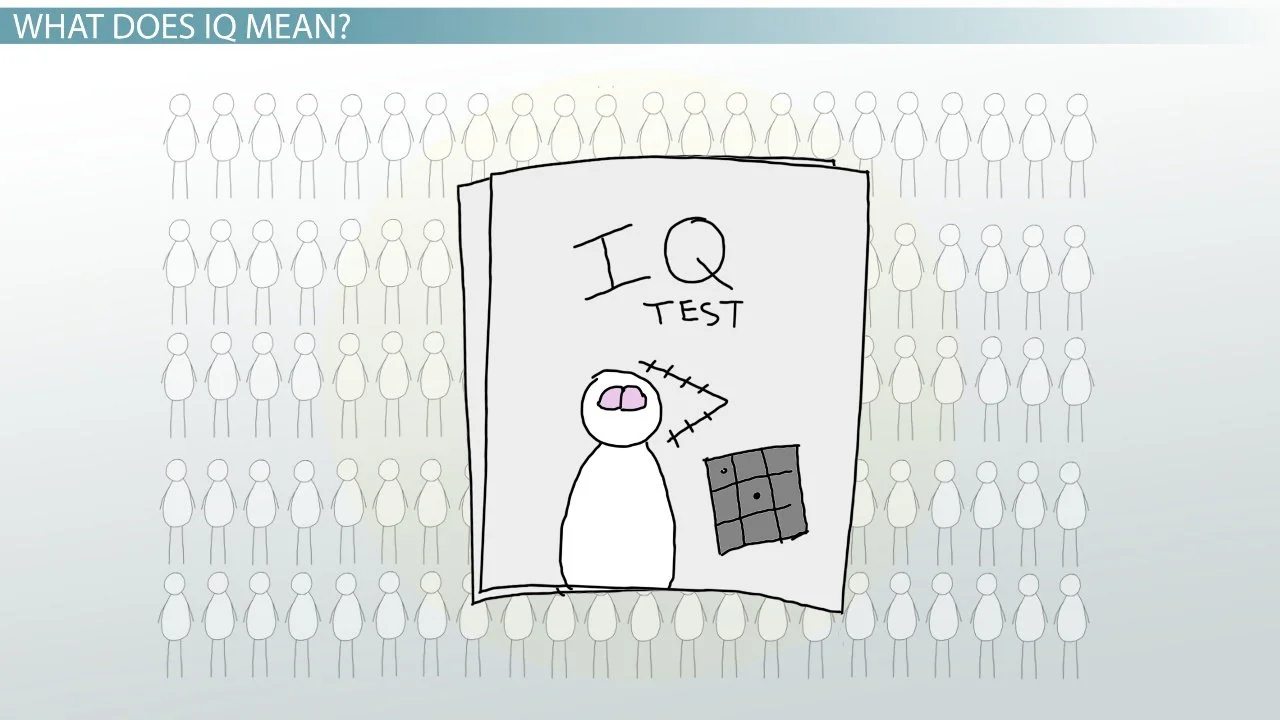
What's your IQ? Don't you know?
If you were a kid in the early 1970s, you may have been given the "Intelligence Quotient" (IQ) test, which was heralded as the definitive indicator of potential and determined whether you were destined to be a rocket scientist, a corporate mogul, or sweeping the floors at NASA.
I was one of the cusp kids who took the IQ test, and the results were shared with us.
But by the 1990s, something fascinating happened: Emotional Intelligence, or EQ, entered the conversation. Suddenly, the ability to navigate social complexities, manage emotions, and the ability to empathize seamlessly became as crucial as mastering calculus. Fast forward to the 21st century, and we find ourselves at an interesting crossroads. The debate has evolved—it's no longer just about IQ or EQ. The question now is: how do we equip our kids and grandkids to thrive in a world that demands a harmonious balance between brain and heart?
The Evolution of Success Metrics: From IQ to EQ to ???

A little bit of history. For decades, the IQ test reigned supreme. If you aced those puzzles and logic problems and scored 131 or higher, society and "your teachers" deemed you fit for success. Even though the purpose was not to use that information for or against you in the academic space, as we know, over time, theory and reality don't always align. Talk about labeling. A high IQ was synonymous with expected academic excellence, supposedly guaranteeing a bright future. Yet, despite their cognitive prowess, some of the most intelligent people struggled with relationships, failed to lead teams effectively, and battled personal demons. I could tell you many stories of Mensa-level IQ kids who couldn't figure out how to cross the street successfully.
Then came Daniel Goleman's work on Emotional Intelligence in the 1990s, introducing the world to a new way to identify success. EQ emphasizes self-awareness, social skills, and empathy. I was in the business world when EQ went mainstream. We went from hiring people only with advanced degrees, but now a new dynamic has been introduced: hiring based on people skills.
But as technology, globalization, and societal challenges evolve, even EQ isn't enough. In today's hyperconnected world, what other forms of intelligence do we need to nurture?
21st Century Kids: Balancing Cognitive and Emotional Skills
Now, let's look at our current world. Kids today are growing up in a digital landscape where information is abundant, but emotional connections can be fleeting. There are still questions about the fairness, cultural, and learning bias of IQ tests, leading to restrictions on their use, but my daughter had an IQ test for entrance into the school's gifted programs, so it is still being used.
While IQ assesses general intelligence, which includes logical reasoning, mathematical ability, and special recognition, it does not demonstrate critical thinking, which is all about considering multiple perspectives. A high EQ enables people to build meaningful relationships, but there's a new intelligence gaining traction: AQ—Adaptability Quotient.
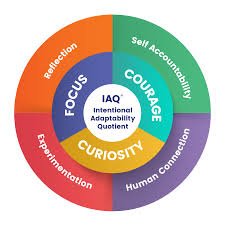
What is the Adaptability Quotient (AQ)?
The late 2010s—early 2020s emerged as a time when a measure of a person's ability to adapt to change, uncertainty, and new environments emerged. This has become increasingly important in the 21st century.
Kaufman Assessment Battery for Children (KABC) is just one of the many tools and assessments specifically designed to measure AQ. They measure how well someone can adjust to changes, learn new skills, and thrive in uncertain environments. As automation and AI reshape industries, the ability to pivot, learn, and grow is more crucial than ever. For the first time, we're seeing a triad of intelligence—IQ, EQ, and AQ—that together shape a well-rounded individual.
Success for our kids and grandkids will depend on how well they perform academically or connect emotionally and how agile they are in the face of constant change. So, how do we nurture this, without taking the test?
Nurturing the Brain: Enhancing IQ in the Digital Age
Fostering cognitive development is as essential as ever. Traditional approaches like reading, problem-solving, and exploring STEM remain critical, but we must also teach digital literacy in a world driven by technology. Here's how:
· Encourage Creative Problem Solving
Expose kids to challenges that require innovative thinking. Puzzle games, coding exercises, and strategy-based activities sharpen cognitive skills while promoting creativity.
· Promote Lifelong Learning
Kids who learn to love learning stay mentally agile throughout life. Encourage curiosity by supporting their interests, whether exploring space, mastering chess, or building robots.
· Use Tech Wisely
Digital tools can either hinder or enhance cognitive growth. If used mindfully, educational apps, interactive e-books, and AI-based tutors can enrich the learning experience.

Cultivating the Heart: Why EQ Still Matters
In the age of social media, fostering emotional intelligence is more challenging—and more critical—than ever. Kids need to learn empathy, resilience, and interpersonal skills in a world that often prioritizes digital interaction over face-to-face connection. Here's how we can help:
· Teach Empathy Through Storytelling
Books and films that explore diverse perspectives help kids understand and appreciate different emotions and experiences.
· Encourage Mindfulness and Emotional Regulation
Practices like meditation or journaling help kids manage their emotions and stay grounded. This builds resilience and reduces stress.
Building AQ: The New Frontier
Adaptability will be the superpower of tomorrow. Teaching kids to embrace change, learn from failure, demonstrate grit,and remain curious will give them a distinct advantage. Here are some strategies:
· Normalize Failure and Foster a Growth Mindset
Kids who fear failure are less likely to take risks or try new things. Celebrate effort over outcomes and emphasize that mistakes are opportunities to learn.
· Expose Kids to Diverse Experiences
Whether traveling, learning new languages, or trying different hobbies, varied experiences build adaptability by teaching kids how to navigate unfamiliar environments.
· Encourage Critical Thinking in Uncertainty
Present kids with ambiguous situations and ask them to brainstorm solutions. This teaches them to remain calm and analytical when faced with uncertainty.
The Ultimate Showdown: Brain vs. Heart vs. Change
The truth is, the debate between IQ and EQ has evolved into a dynamic trio, with AQ now in the mix. It's not about one winning over the other. Success in the 21st century will depend on how well we can help our kids balance all three.
So, who wins the ultimate showdown? The answer lies in synergy. Kids who harness their brain power, lead with their hearts, and adapt to the tides of change will succeed and thrive.
And isn't that the ultimate goal?