Fun and Creative Ways to Use a Kids Dictionary to Bond with Grandparents Far Away—While Boosting Literacy

I have a love/hate relationship with my life.
No, there is no need for intervention. This is an epiphany that has been occurring as grandkids have appeared.
You have heard me say this before: My grandkids don't live near me, and it's a perpetual challenge to find ways to interact, build lasting memories, influence their literacy development, and show them that being old (er) doesn't mean you don't have value to add.
I know this may sound like a lot of baggage, but trust me, it's not…really.
Let me start first with my loves: I love being an author, I love my travels, I love my home, and I love my little community. But what I really hate is being 3,000 miles away from my grandkids. No, I am not moving to Seattle, full or part-time, and they are not moving my way, so the great divide will be a part of our life to deal with. As I ponder this situation, I feel like we are just a page away from laughing, learning, and making memories together.
So, I have a plan, and I would love to know your thoughts.
As we all know, connecting with family over long distances is more manageable in today's digital world than when we were kids. But my conundrum is, what if we could do more than just connect? What if I could use that time to boost my grandkids' literacy skills while having fun as their grandparent?

As authors, we are passionate about fostering reading. I wanted to find an educational tool that could transform the bridge between generations and foster reading development, vocabulary growth, and writing skills, all while having a blast.
Enter "THE dictionary."
Step one: I bought two kids' dictionaries. One will stay in Seattle, and the other will be at my home. It's nothing fancy, just Webster’s First Kid Dictionary. It is a unique treasury of words, specially written for children in grades K-2, ages 5-7. This beginner’s dictionary introduces young readers to 3,000 words using 1,000 entries and hundreds of captivating illustrations.
Step two: Try one or all of these face-to-face and tweak as necessary.
Now, I must be transparent and say that I have not tried any of these…yet, but in a few days, I will be heading to Seattle and figured I would explore these ideas to make learning fun and set the stage for when I am back home.

Idea #1
Create a "word a week" challenge
It is a perfect way to help my grandkid expand his vocabulary while keeping things fun and engaging. I believe that learning new words isn't just about memorizing definitions—it's about understanding how to use those words in everyday life, a key component of literacy.
So, what we are going to do is:
Choose Words Together: We will take turns picking a word from the kid's dictionary. Aiming for new or less familiar words will keep it exciting and educational. We will still take turns when I get home during one of our FaceTime calls.
Learning in Context: Then, each of us will use the word in a sentence or create a short story around it. This practice will help my grandson understand how words work in different contexts—a crucial part of literacy development.
Daily Usage for Fluency: For the entire day (or week), we will use the word in conversations, text messages, or even interaction with his parents, at school, or with friends. The more he uses it, the more naturally it will become part of his vocabulary.
By actively engaging with new words, he will improve his reading and comprehension skills, which are key pillars of literacy. Plus, sharing this activity with me will create a lasting memory!
Idea #2
Dictionary Charades: Build Word Recognition through Play
Charades are a fantastic way to get kids excited about learning while boosting their literacy through word recognition and active engagement. Here's how to play it with a dictionary:
Pick a Word: Either of us can pick a word from the dictionary without revealing it.
Act It Out: The chosen word must be acted out (without speaking it) while the other person tries to guess. This game reinforces word meanings and recognition in a fun, physical way, linking literacy to play.
Discuss the word Afterward: Once the word is guessed, my plan is to have him explain what it means or read its definition. This will help deepen his understanding of the word rather than just recognizing it.
By associating new words with actions, children develop a stronger recall and understanding of vocabulary, which is critical for literacy growth.
Idea #3
Rhyme Time with the Dictionary: Boost Phonemic Awareness
Phonemic awareness—the ability to recognize and work with sounds in words—is an essential component of literacy. What better way to develop this than with a rhyming game using a kid's dictionary?
How to do it:
Pick a Word: Start by picking a word from the dictionary, like "cat."
Find Rhyming Words: The challenge is to develop as many rhyming words as possible. These could be words from the dictionary, like "bat" or "hat." If he gets into it and feels extra creative, we can even make up nonsense rhymes for fun!
Create Rhyming Poems: After gathering some rhymes, we can create a short rhyming poem together, helping him develop phonemic awareness and creative thinking.
Rhyming games support the development of phonics and spelling skills, both vital elements of early literacy.
Idea #4
Story Creation Using New Words: Developing Writing and Creative Skills
Storytelling is a powerful way to engage kids in both reading and writing. Using words from the dictionary, he can build stories that encourage creativity while developing essential literacy skills, like writing fluency and sentence structure.
How to do it:
Pick Three Words Together: Pick three new words from the dictionary. Then, create a short story using these words. For instance, if the words are "elephant," "mysterious," and "jungle," you could craft a tale about a curious elephant who goes on a mysterious adventure in the jungle.
As he gets older, I will add (he is currently only 4):
Boost Writing Skills: This activity encourages him to think critically about constructing sentences and developing a storyline—a key aspect of literacy. Plus, he'll have fun imagining wild adventures with me!
Share and Discuss: Have him read his story to me, fostering creative expression, oral literacy, and public speaking skills.
Through storytelling, children become more confident writers, learning to use new vocabulary in an imaginative and structured way. Plus, it's a great bonding activity!
The following ideas are for him as he gets older, but if these dictionary games work as planned, he will be excited to add them to our activities.
Idea #5
Dictionary Scavenger Hunt: Reading and Comprehension in Action
We all love scavenger hunts, so this idea doesn't just promote fun—it's a wonderful way to enhance reading comprehension. By searching for words, he will sharpen their ability to locate information quickly and understand how to use reference materials—essential literacy skills.
How to do it:
Give Word Clues: I will create a list of word clues and send them via email or during a phone call. He can then use the dictionary to search for words that fit the clues. For instance, "Find a word that describes something that shines in the sky at night" (answer: star).
Explore Definitions: After finding the word, I would have him read the definition aloud, reinforcing the connection between the word and its meaning. This reinforces word recognition and comprehension.
Make It a Two-Way Activity: He can create clues for me, flipping the roles and strengthening their understanding of explaining words to others.
By incorporating reading comprehension and definition exploration, this scavenger hunt brings us closer and strengthens a child's ability to make sense of language in context.
Idea #6
Letter Writing Using New Words: Strengthen Writing and Penmanship
There's something special about receiving a letter in the mail, especially one filled with fun, new words! Letter writing is an excellent opportunity to develop literacy, improve writing skills, and bond with a grandparent.
How to do it:
Challenge Each Other: Ask him to write a letter to me using a new word or two from the dictionary. I then can respond in kind. This encourages thoughtful writing, spelling practice, and using words in context.
Make It Fun and Creative: He can get creative by incorporating new vocabulary into poems, stories, or riddles. This would allow me to do the same, leading to delightful exchanges that boost writing and reading comprehension.
Improve Penmanship: Not only does this activity help improve literacy, but it also enhances handwriting skills—an important yet often overlooked part of communication.
Writing letters is a simple way to foster writing fluency, develop narrative skills, and strengthen the bond between a child and their grandparent, all while enhancing literacy.
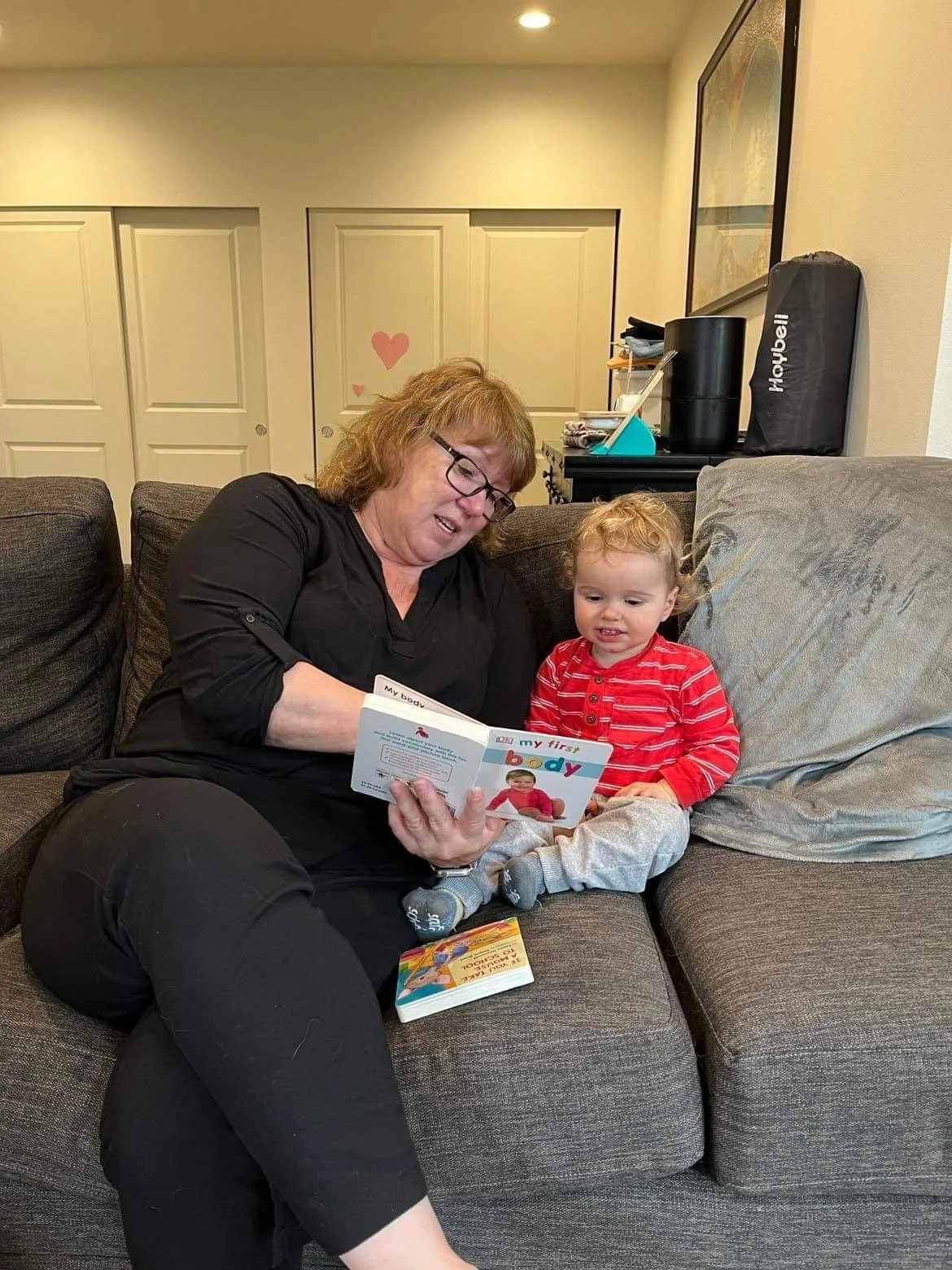
Wrapping It Up: Fun, Connection, and Literacy Growth
A kids' dictionary can be a fantastic tool for strengthening bonds between us and building essential literacy skills for them. Whether through scavenger hunts, storytelling, or rhyming games, each activity promotes vocabulary development, reading comprehension, writing skills, and phonemic awareness.
Distance may separate us physically, but with the power of words, creativity, and the right tools, we can turn any moment into an opportunity for learning and connection.
Of course, there will probably be tweaks as we play these dictionary games as he gets older, and his baby sister can start the process all over again.
So why not pick up that kid's dictionary and start building new traditions today?