Unpacking the Myth: Is Every Child Really Gifted, or Just Special?

Numerous new parents believe their child possesses extraordinary gifts. They often boast about their little one's early accomplishments, seemingly engaging in an unspoken competition. They involve their children in activities at increasingly tender ages to keep up with “The Jones’s baby.” But amid this fervor, the question remains: Are these children genuinely gifted? And is that a good thing in the long run?
Defining Giftedness: What Does It Mean?
In educational and psychological terms, gifted individuals often score significantly above average on intelligence tests (such as an IQ score of 130 or above) or demonstrate exceptional performance in other measured abilities. Compared to peers, this could involve advanced intellectual, creative, artistic, or leadership capacities.
Giftedness, however, is more complex than a mere number or test result. High IQ may be a factor, but motivation, creativity, emotional intelligence, and perseverance also play critical roles. Being "gifted" is a multi-dimensional concept involving more than just academic prowess.
Falling Into the Giftedness Trap
Many parents fall into the so-called "gifted trap," as I once did. When my children were young, I believed they were ahead of the curve in every measurable way. My boys walked and talked early and seemed to outperform their peers according to the "What to Expect" parenting books. Naturally, I assumed they were on the fast track to giftedness.
But when it came time for my middle son to test into a gifted program, the results were surprising. Despite early indications of his brilliance—counting coins and writing names at age three—he did not qualify for the program due to a misunderstanding during the testing process. He understood the test administrator to ask, “What is 1 minus 2?” instead of “What is 2 minus 1?” He wavered on the answer since he was wondering about negative numbers, something they had not learned yet.
However, this moment was a wake-up call for me, one that made me question not only the testing process but also what it truly meant for a child to be considered "gifted."
The Reality of Gifted Testing
Gifted programs often use IQ tests as the primary measure, but these tests are not foolproof. For instance, when my middle son was tested again in Chicago between first and second grade, the teacher was initially hesitant due to previous experiences of children performing poorly under pressure. Testing for giftedness can be intimidating, especially for introverted or anxious children who may underperform in formal settings. My son fits into that category.

My son Peyton (left) and a friend working on their 2nd grade project.
Even when my son advanced through multiple levels of testing, the evaluators eventually stopped because of time constraints, not because he answered a question wrong. His final IQ score came back at 148—well into the "gifted" range. But this result, while exciting, raised another set of questions: What does an IQ score mean in the larger context of life?
The Limitations of IQ Alone
While an IQ of 148 is undeniably impressive, it is essential to remember that IQ is only one aspect of giftedness. Emotional intelligence, perseverance, and creativity are equally important factors in long-term success and happiness. Many children with high IQs struggle in other areas of their development, and without a balanced approach to nurturing their abilities, these children may face challenges later in life.
For my son, the ease with which he navigated academics led to a significant struggle in college. For example, he slept through High School physics class and still received an A. Since he had never needed to study or work hard, when faced with more challenging courses, he lacked the tools to succeed. This is a common issue among gifted individuals—they can often breeze through early life without learning the discipline and perseverance to face adversity. Because he was also gifted in sports, he lacked any challenge up until college.
Giftedness Comes With a Price
Giftedness, while often lauded, comes with its own set of challenges. High IQ individuals may experience:
Social isolation due to feeling different from peers
Overthinking and anxiety due to their heightened intellectual capacities
Perfectionism, which can lead to feelings of inadequacy or burnout when perfection is unattainable
Difficulty with persistence because they haven't been challenged enough to develop perseverance
Without proper guidance, these children might struggle emotionally, leading to loneliness, anxiety, and even depression. It is crucial to nurture their emotional well-being alongside their intellectual abilities.
Gifted or Special: Does It Matter?
In the end, while giftedness can lead to remarkable achievements, it does not guarantee success or happiness. Each child is special in their own way. Some children may excel in academics, while others may shine in creative pursuits, athletics, or social skills. Every child has unique gifts, but not all are "gifted" in the traditional sense, and that’s perfectly fine.
In fact, children who face challenges early on often develop stronger perseverance, problem-solving skills, and emotional resilience. These traits can be just as—if not more—important than having a high IQ.
Abandoning the Myth of Giftedness
As parents, it's easy to get caught up in the notion that a high IQ equates to lifelong success. However, true success comes from nurturing a child’s unique strengths, fostering emotional intelligence, and teaching the value of hard work and persistence.
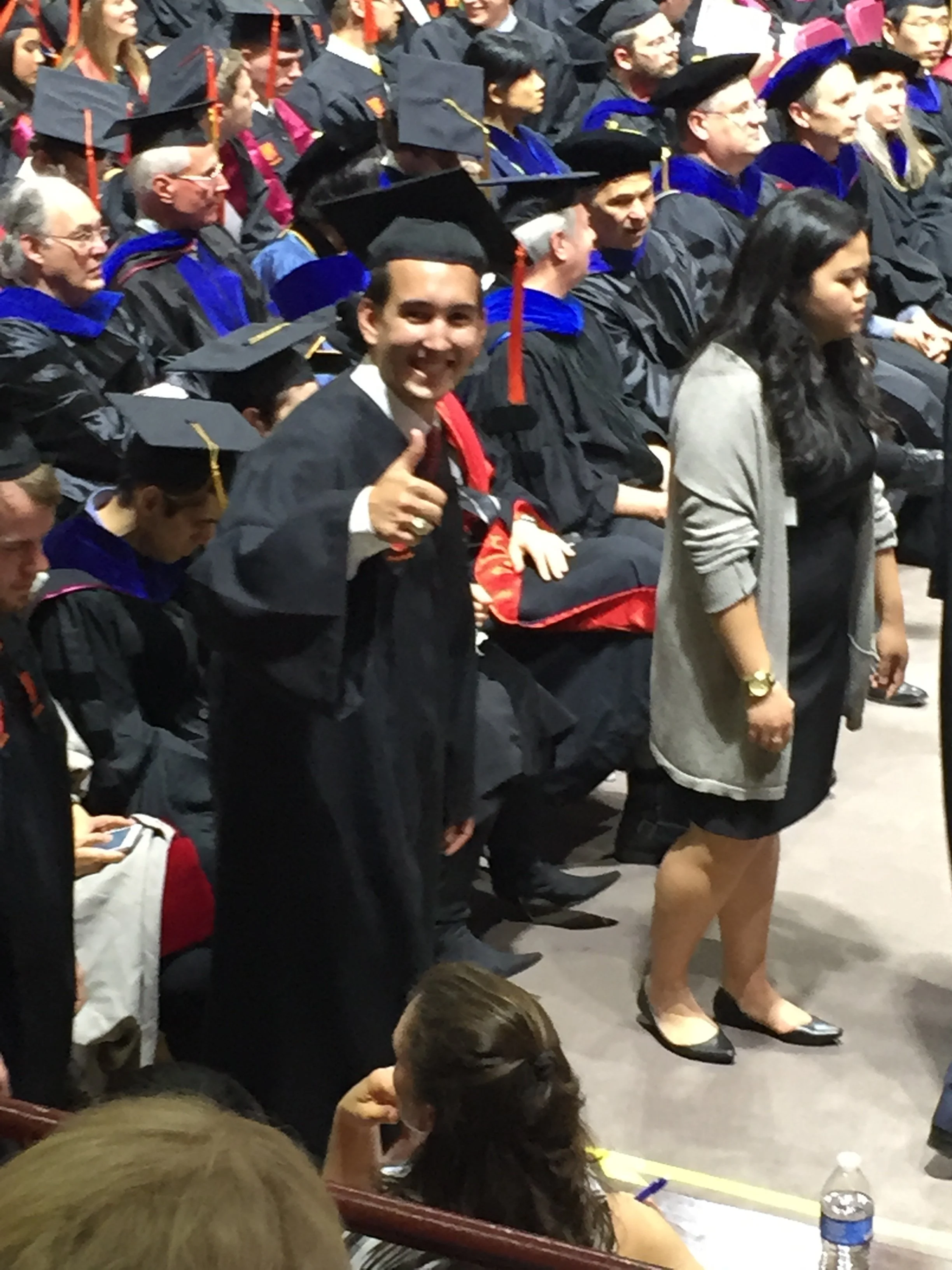
Peyton at Virginia Tech Graduation, Industrial and Systems Engineering
For my son, now an adult, the journey through giftedness has been a learning experience. While his high IQ opened doors, it was the development of resilience and emotional maturity that ultimately led to his success.
So, to new parents and grandparents: treasure your children for who they are. Recognize their unique gifts, but don't fall into the trap of chasing labels like "gifted." Instead, focus on raising well-rounded, happy, and emotionally resilient individuals. Gifted or not, that’s the best kind of success.
FAQs
1. Can gifted children struggle in school?
Yes, gifted children can struggle, especially if they are not challenged or if they lack the emotional maturity to handle their abilities. They may also face social isolation and perfectionism.
2. How do you know if your child is gifted?
While IQ tests are a common measure, giftedness can also manifest in advanced problem-solving skills, creativity, or talents in specific areas like music, art, or athletics.
3. Is having a high IQ enough for success?
No, success also requires emotional intelligence, resilience, and the ability to persevere through challenges. High IQ alone does not guarantee happiness or success.
4. Should all children be tested for giftedness?
Not necessarily. Testing can be helpful in certain situations, but focusing too much on labels can overlook other important aspects of a child’s development.
5. How can parents support a gifted child?
Parents can support gifted children by encouraging both intellectual and emotional development. Nurturing creativity, social skills, and resilience is just as important as academic success.