The Math Conundrum: A Lifelong Struggle Unresolved | Personal Story

I hate math! Yep, Math.
In my world, every time I hear, "It's time for math," "Can you calculate that," or "Can you figure out how much we should charge…" I cringe. It is my kryptonite. The dreaded four-letter word for me was M-A-T-H.
I never had Math Dyscalculia. This type of dyslexia affects brain areas that handle math- and number-related skills and understanding. Now, you're probably wondering why I loathe such a necessary skill. Without diving into therapy or psychoanalysis, I've thought about it often and finally identified the defining moment. It was the year I moved from 5th grade to 6th in school.
However, to be totally transparent…I love counting change. Seriously. Don't believe me? Let me show you.
Think of a time when you decided to pay with cash instead of a credit card. Yes, that does happen. Stay with me. I buy something that costs $7.32. I hand the cashier $20.00. Change? Easy. At least for me. While the cashier either uses the cash register to figure out how much I get back or, worse yet, stands there scratching their head, I seamlessly calculate:
3 pennies ($0.03)
1 nickel ($0.05)
1 dime ($0.10)
2 quarters ($0.50)
2 one-dollar bills ($2.00)
1 ten-dollar bill ($10.00)
So, the change from $20.00 for a price of $7.32 is $12.68.

This skill was honed starting at the early age of 3 while working. No, we weren't child laborers. Rather, we had the privilege of working in the family business. During downtime and without a calculator or a "smart" cash register, we would spend hours "buying and giving change" with our cousins, aunt, grandma, and mother. We also practiced "stealing" to spot if someone was taking something off the shelf without paying…but that's another story.
Back to the dreaded M-A-T-H, my literacy challenge.
Early Years: Loving Math
In the years before 6th grade, I liked math. It was logical. 1 + 1 = 2, even doing long math, carrying the one, etc., made sense to me. A little memorization, and you’ve got it. Now, I knew that calculus was in my future, but at this point, there was no fear…yet.
The New Math Movement
Then, the "new" math movement was introduced into the U.S. public school system, I think, around the early 1960s. As a kid, I didn't know why this significant change was made, nor did anyone explain it in a way that 10-year-olds would understand. However, it appears that this educational reform was a response to the launch of the Soviet Union's Sputnik satellite in 1957, which led to concerns about the competencies in science and mathematics of American students.
The methodology included introducing abstract concepts such as set theory, number bases other than ten, and abstract algebra at earlier grade levels. The goal was to provide a deeper understanding of mathematical principles and foster higher-order thinking skills.
The School Mathematics Study Group (SMSG) spearheaded the movement, funded by the National Science Foundation, and developed new curricula and teaching materials to implement these changes. I'm sure parents pushed back and there probably was resistance from the nuns who were supposed to teach us.
The Defining Moment
Now, as adults, we know that successful change can only take place when those closest to the change understand it. As a kid, I was oblivious. What my older sister did in school was only mildly interesting to me since she was always an "A" student. Math and science were her mothership, so I was unaware of whatever was happening in her 6th-grade activities.
However, the defining moment for me happened because my parents had moved the family that fateful year. With the new home came a new school district, which had me change schools. Besides all the emotional and physical changes accompanying being introduced to a new school infrastructure, I learned that the new math had already been taught in this new school the year BEFORE I transferred in. Agh!
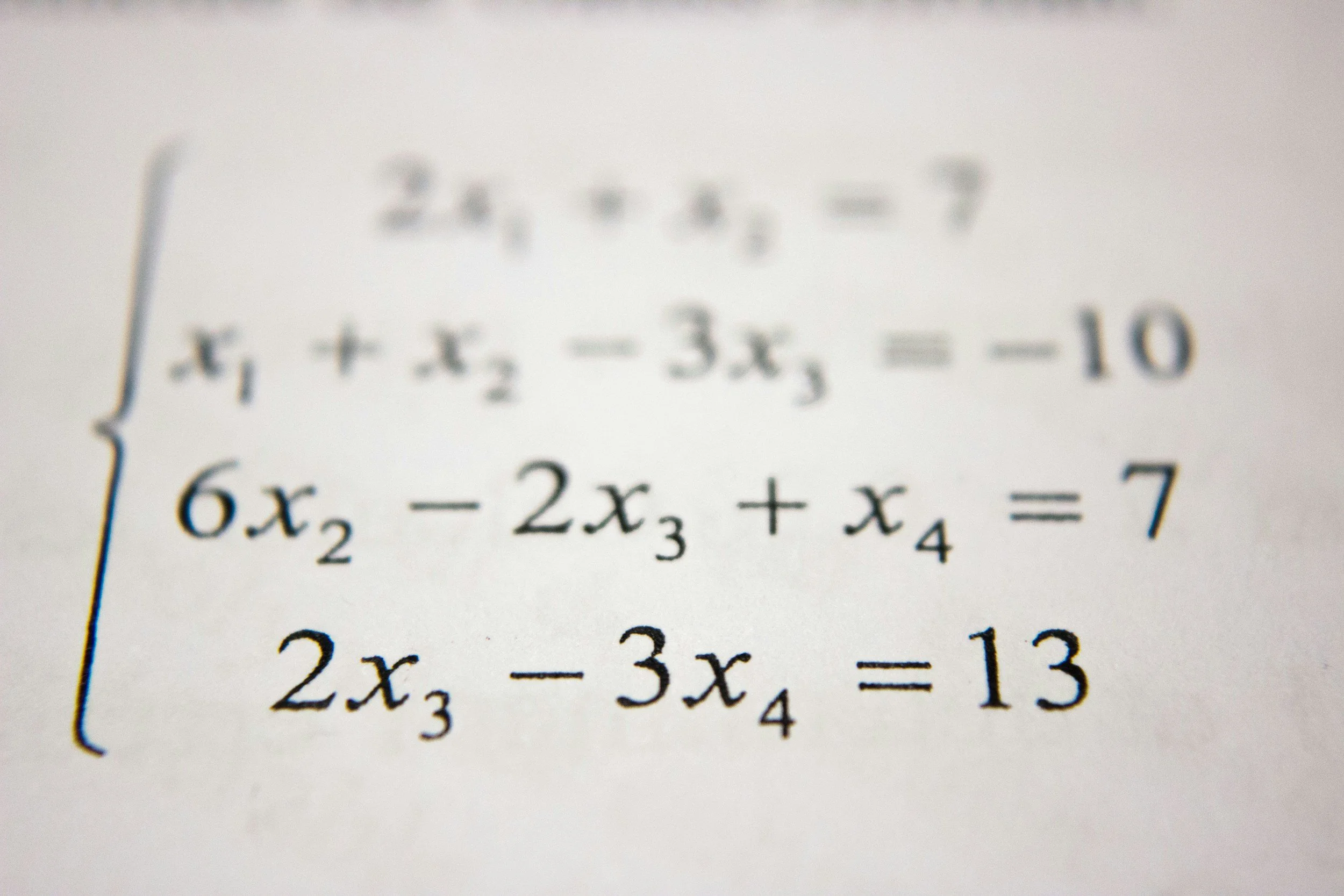
Every textbook and classroom material was redesigned to incorporate algebraic structures like groups, rings, and fields. What happened to 1 + 1? I like logical thinking, but remember, I grew up with traditional arithmetic drills and problem-solving. A new language was never a math thing.
From that point forward, I struggled and continued to struggle with math. I did learn that by the 1970s, the "new" math movement began to fade due to criticism and difficulties in implementation. Their research showed that these concepts' complexity and abstract nature were seen as impractical and overwhelming for both students and teachers…duh!
The Ripple Effect
Even though it was never called "new" math, my daughter saw other educational initiatives and changes in the math curriculum around the same grade I had dealt with all those fateful years earlier. These reforms focused on balancing conceptual understanding with practical skills, improving problem-solving abilities, and integrating technology into learning. I hate to admit it, but I could not help her in any way, and when she had to "show her work," I cringed…again.
Conclusion
Ultimately, my math journey has been one of struggle and resilience. While I have yet to fully embrace the subject, I have accepted my literacy challenge and learned to appreciate the logic and structure it brings. Change, especially in education, is inevitable. The key is to adapt and hope that another space race will NOT cause more math changes.