Grandparents Unite: STOP Reading to Your Grandkids

Are your grandkids simply sitting idly, passively listening to the story? Is the bedtime reading designed to unwind and prepare them for a quick slumber? What? No! Stop it now.
It's time to stage a rebellion against the tired tradition of reading to your grandkids! That's right, put down those dusty books, and let's explore some fresh, interactive ways to spark their imagination and curiosity. Okay, okay, you may think I am a little crazy, but bear with me. Have you considered trying out interactive reading sessions as a new approach? Because let's face it, reading alone won't teach them the wonders of the world – but fear not, we've got some tricks up our sleeves to make story time an adventure they'll never forget.
We all agree that reading is good. I bet that we can even agree that there are some fantastic, insightful, and creative books jammed packed with lessons and values. So, yes, books are good. I am, however, advocating that we stop just reading in favor of a more active form of interactive learning that will foster creativity and critical thinking skills. Read on if you want a fresh approach to bonding with your grandkids.
FACT:
Grandparents love their grandkids. We play an irreplaceable role in influencing - from storytelling to moral shaping - and one common activity is reading to them, yet reading words and looking at pictures isn't enough. Now, my goal is not to discourage your involvement in their lives but rather encourage your reading time to be more interactive. It's never too early to ask our grandkids to find things in the book after the reading or tell them unusual facts about the characters or scenery. I am not suggesting we STOP reading; instead, I suggest we read differently. Let's add some S.P.A.R.K.!
So, what is SPARK?
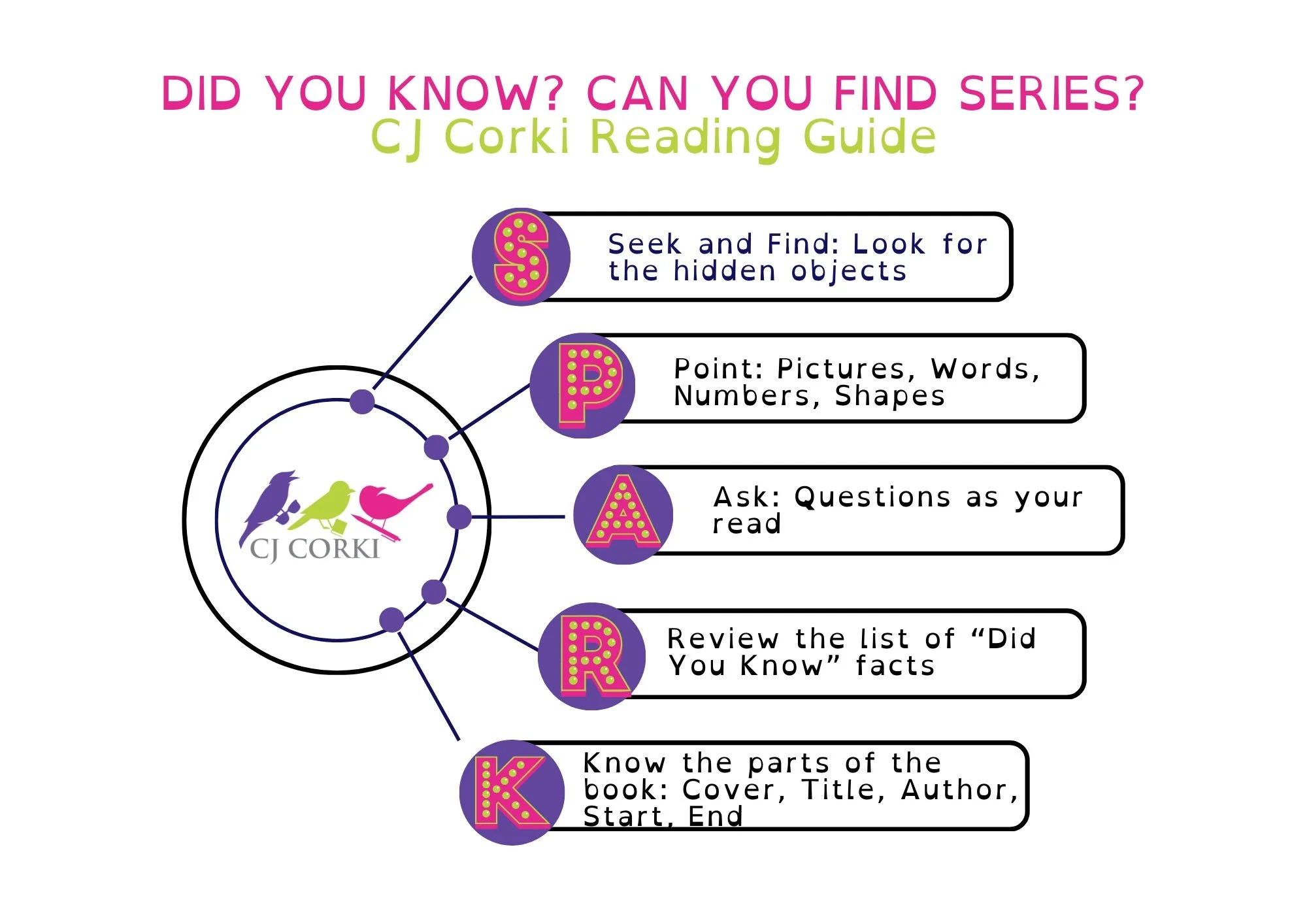
SPARK is a powerful abbreviation that embodies critical strategies for helping kids become more interactive readers.
S—Seek and Find: This activity encourages active searching for items hidden in plain sight, hidden objects throughout the book, or even playing the "something that is like another" game.
P – Point: Emphasizes the importance of making connections between the importance of making connections between words, illustrations, and their own experiences, promoting comprehension and critical thinking. Before turning the pages, point to different things each time. Pictures, words, numbers, shapes, letters, colors…you get the idea.
A – Ask: Encourages us to pose questions like; What do you think might happen next? How do you think they feel? Can you tell me what animal is making that sound? Can you point to the red object on the page?
R – Review: Prompts kids to reflect on what they've read or help them learn to research if there is something they don't know. Reinforcing retention and enabling them to make connections between different parts of the text.
K—Kickstart & Identify: This activity inspires children to learn that there is more to the book than the story. Start at the beginning, reading the cover, the authors' and illustrators' names, the copyright page, and the dedication. Don't forget the About the Author page and anything else found at the end of the book.
By embracing the SPARK approach, children can develop essential literacy skills while experiencing the joy and empowerment that come from being active participants in their reading adventures.
FACT:

Children are like soft clay; their minds can easily be molded. We know that reading aloud is an invaluable practice that can assist with language acquisition and sentence structure comprehension and instill a love of reading. However, if we read differently, we also encourage critical thinking and problem-solving and use each book as a lesson.
Today, we live in an age of rapidly evolving technology where future generations must be more agile than ever. Let us prepare them for this era by encouraging them to develop an interest in reading more than just words; let us encourage them to cultivate knowledge rather than passively absorb it.
Grandparents, we encourage you to rethink just reading to your grandchildren. This is not meant as an attempt to eliminate reading time altogether but more as a call to step back and allow your grandchild to learn more. While you're welcome to accompany them on their reading journey this time, allow them to drive the vehicle of imagination and creativity!
We must recognize and foster storytelling's importance in all its forms and actively encourage grandparents to keep sharing books with their grandchildren. Do not underestimate how powerful an impactful story can be on young minds; instead, let us celebrate their role in cultivating reading as part of developing future readers!
So, grandparents, next time, you pick out a book for reading time and try something to make it more engaging.

Remember, SPARK isn't just for fireworks; it's the explosive secret to keeping kids captivated and engaged through storytime—because who wants a fizzle when you can light up their minds with Seek, Point, Ask, Review, and Know!"