Don’t Let “Yes” End the Story: Better Questions for Story Time
When “Yes” Stops the Conversation
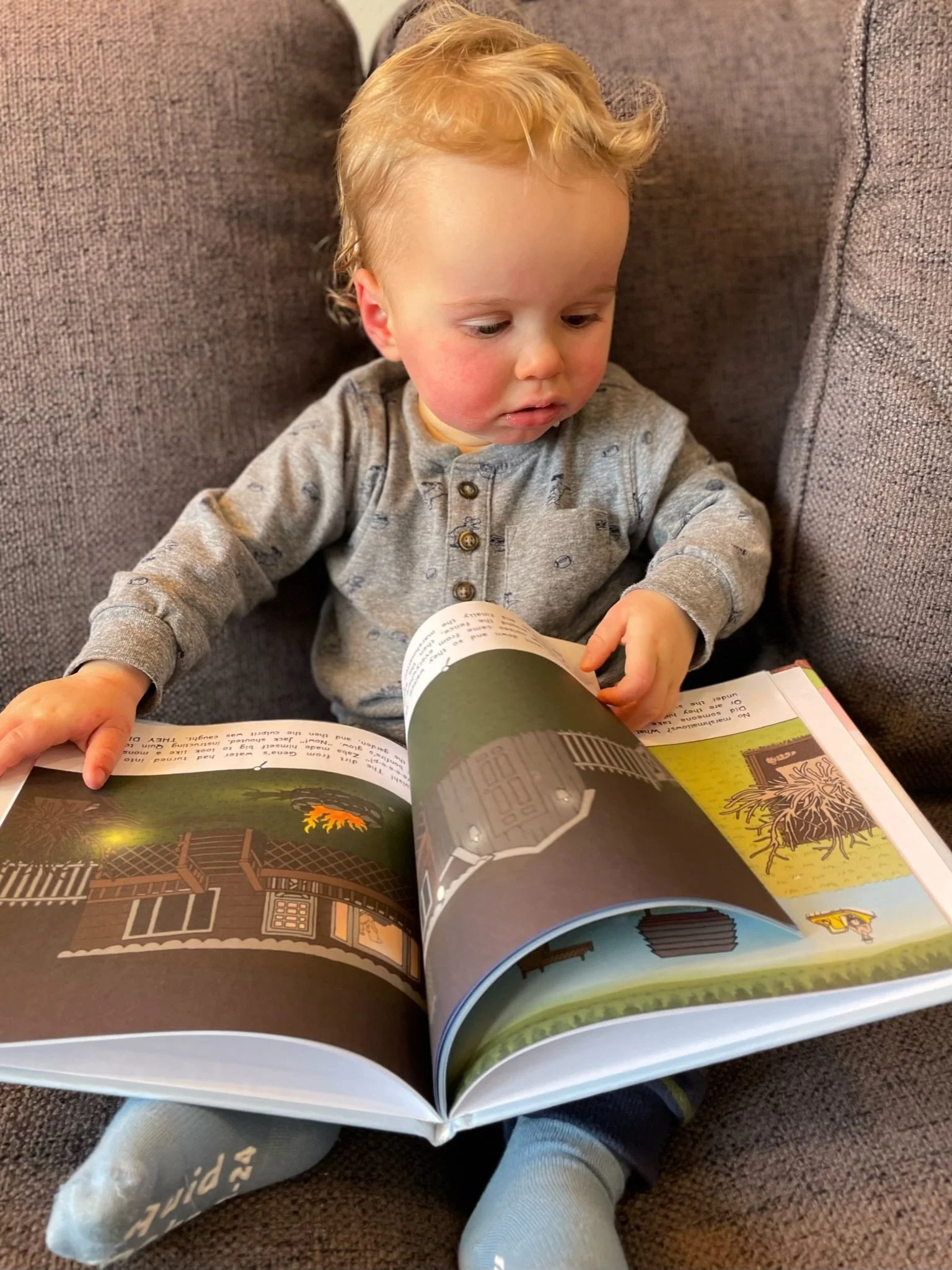
I don’t know about you, but reading with my grandkid is one of the sweetest parts of the day. You snuggle in, open the book, turn the first page, and prepare for a magical literacy moment.
Then you ask, “Do you like this book?”
Your grandchild says, “Yes.”
And there it is. The conversation is over before you realize.
Now, there is nothing wrong with a yes-or-no question. We all use them. They are simple, quick, and sometimes exactly what we need. “Are you ready?” “Do you want to read one more page?” “Is that puppy silly?” Those questions have their place.
But if we want to turn story time into a richer conversation, yes-or-no questions can stop us short. They give a child only two choices: yes or no. That may be easy, but it does not always invite much thinking, noticing, imagining, or talking.
And that is where better story-time questions come in.
The “A” in S.P.A.R.K.
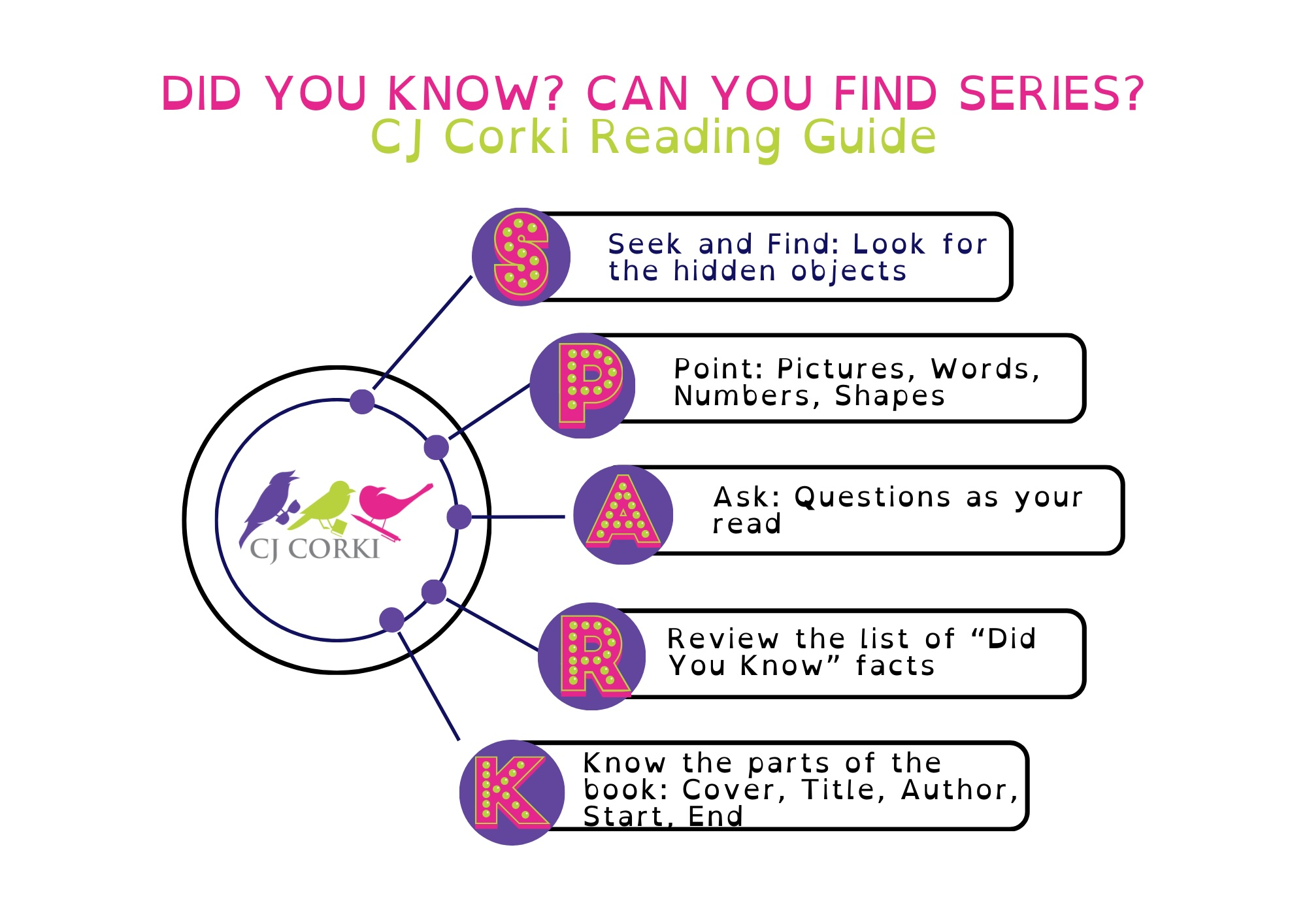
As grandparents and authors under the pen name, CJ Corki, we believe the S.P.A.R.K. framework can help families make reading more interactive. Each letter gives adults a simple way to build early literacy while keeping books fun and joyful. The A in SPARK stands for Ask: ask questions as you read.
Don’t worry. That does not mean we need to quiz our grandchildren on every page. It does not mean reading time should feel like school. It simply means we can use questions to help them notice, think, wonder, and respond.
A good question opens a door. A yes-or-no question can sometimes open that door just a crack. A better question swings it wider.
Instead of asking, “Do you see the bear?” how about asking, “Where do you think the bear is going?” Instead of asking, “Is he sad?” we can ask, “How do you think he feels?” Instead of asking, “Do you like this page?” we can ask, “What is your favorite thing on this page?”
Those questions give your grandchild room to think. They invite them to look at the picture, connect ideas, and use words in their own way.
From Quick Answers to Real Conversation
Yes-or-no questions can become a habit because they feel easy. They are also fast. When we are tired, busy, or just trying to get through bedtime without anyone requesting water for the fourth time, easy questions are very tempting.
But too many yes-or-no questions can make story time feel flat.
If we ask, “Is that a dog?” and he says, “Yes,” then ask, “Is the dog brown?” and he says, “Yes,” then ask, “Is the dog running?” and he says, “Yes,” technically, a conversation is happening. But it is not much of one. We are doing most of the work, and the child is mostly confirming what the adult already sees.
Now compare that to this: “What is that dog doing?” Your grandchild says, “Running!” Then you ask, “Where do you think he is going?” They say, “To get a snack!” Then you ask, “What kind of snack would a dog want?” They say, “A bone!”
Now the page has become a conversation. Your grandchild is noticing actions, making predictions, using imagination, and connecting the story to what he already knows.
That is literacy growth hiding inside a simple conversation.
Better Questions Open Bigger Doors
The best story-time questions do not have to be complicated. In fact, simple is better. A good question gives your grandchild space to answer in more than one way. They might use a word, a sentence, a point, a sound, or a facial expression. All of that counts.
Instead of “Is that red?” try “What red things can you find?” Instead of “Is the puppy happy?” try “How can you tell the puppy is happy?” Instead of “Did you like the story?” try “What part would you read again?” Instead of “Is that a big truck?” try “What do you think that truck is carrying?” Instead of “Is the monster scary?” try “What would you say to the monster?”
These questions invite more than an answer. They invite attention. They help your grandson look closely, make meaning, and share his ideas.
That is the goal.
Not perfect answers. Not long answers. Not reading like a lesson plan. Just more connection.
Pointing, Nodding, and Giggling Counts Too
Sometimes we think a child has to ask a question to “count.” Not true.
Pointing is communication. Nodding is communication. Making a sound is communication. A giggle can be a form of communication, especially if the picture is funny.
For younger grandchildren, questions that allow pointing are wonderful. You might ask, “Can you find something tiny?” or “Where is the bird hiding?” or “Which face looks surprised?” or “What would you touch first if you were inside this picture?”
Your grandchild may not have all the words yet, but they can still participate.
That matters because early literacy grows through interaction. When they point, you can add the words. You might say, “You found the tiny mouse!” or “That bird is hiding in the tree.” Or you might say, “Yes, that face does look surprised. His eyes are wide open!”
This gives them language without pressure. They participate first, and then you gently build vocabulary around their response.
Let Imagination Have a Turn
Some of the best questions have no single correct answer.
That may feel strange at first because adults often like tidy answers. We want to know if the animal is a cow, if the color is blue, and if there are three apples on the page.
Those questions are useful. Children need names, colors, numbers, and facts.
But imagination questions build something different. They help children think creatively, predict, and connect ideas.
Try asking, “What do you think happens next?” or “Where would you go if you were in this story?” or “What do you think that frog is thinking?” or “If this character came to our house, what would we do?”
You may get a wild answer. Good.
So, if your grandchild says the frog is going to the moon, let the frog go to the moon for a minute. That kind of thinking is playful, and play is powerful.
You can always come back to the story. You might say, “Maybe he is going to the moon. Let’s turn the page and see where he really goes.”
Now you have honored imagination and encouraged prediction.

Keep Story Time Joyful
The goal is not to ask a question on every page. That can make a book feel choppy, like driving down a road with too many stop signs.
Instead, choose a few moments. Ask one good question. Pause. Listen. Respond. Then keep reading.
Story time should still feel like story time. It should feel warm, playful, and connected. If your grandchild wants to talk about the picture, follow the conversation for a bit. If he wants to turn the page, turn the page. If he wants to read the same book again, that counts too.
Repeated reading is not boring to a child. It is practice, comfort, memory, and mastery.
Even if you are reading the same book for the 47th time, you can ask a new kind of question. “What did you notice this time?”
That one question can make an old book feel new again.
Try One Bigger Question
So, the next time you read with your grandchild, listen for your yes-or-no questions. You do not have to eliminate them completely. Just try changing one.
Instead of “Do you like this picture?” ask, “What do you like about this picture?” Instead of “Is he scared?” ask, “What makes you think he might be scared?” Instead of “Did you like the book?” ask, “What part should we tell someone else about?”
Small changes can create bigger conversations. And bigger conversations help build early literacy.
That is the power of the A in S.P.A.R.K. Ask questions as you read, but ask in a way that invites your grandchild into the story.
Not as a test. Not as a quiz. As a conversation.
Because when a child learns that books are places to wonder, talk, laugh, and think, reading becomes more than a skill.
It becomes something he wants to come back to again and again.
Literacy Champion Challenge
During your next story time, choose one yes-or-no question and turn it into a bigger question. Ask it. Pause. Let your grandchild answer in his own way.
Then celebrate the response, whether it is a word, a point, a giggle, or a wonderfully silly idea.
Follow CJ Corki for more simple, joyful ways to raise readers together — one question, one story, and one S.P.A.R.K. at a time.