Dyslexia: The Invisible Disability Teachers Often Overlook

Tyler Homecoming
You know what's wild? Our son walked into his class with his arm in a sling after shoulder surgery, and suddenly everyone noticed him. The nurse waved to him to see if he needed any help. His classmates asked if he was okay. Even his teachers softened their tone, offering him extensions and reminding him to "take it easy."
But that’s not the case with dyslexia.
Our son had dyslexia since forever—but no cast, no crutches, no visible sign. And because no one sees it, it doesn’t seem to count.
When Pain is Visible, People Understand
Let me back up.
I recently had shoulder surgery—nothing major, but enough to make daily life a challenge. Writing, carrying things, even getting dressed—suddenly I had to think twice about everything. And yeah, people noticed. People helped.
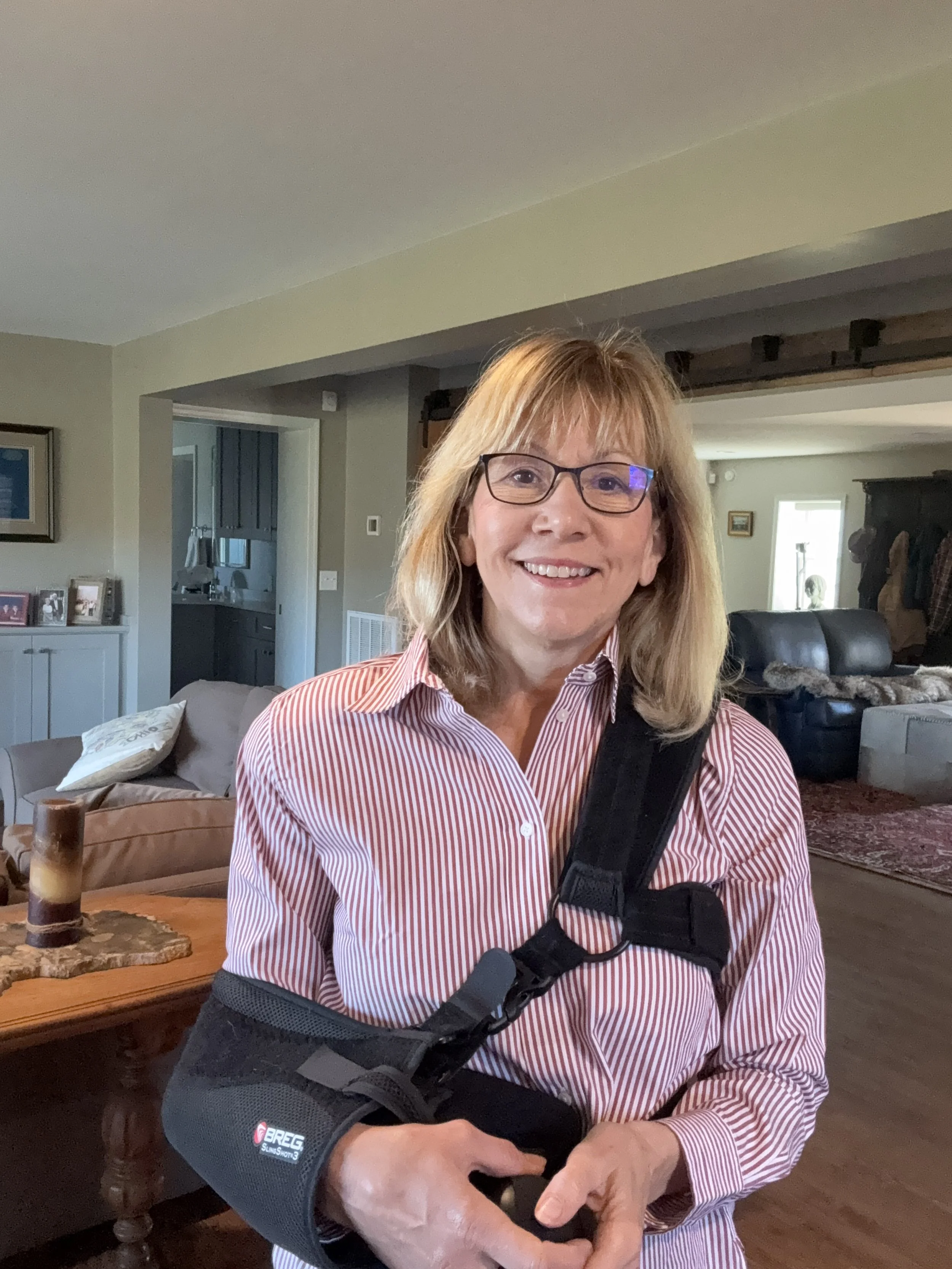
Madeline recovering from shoulder surgery
But while I was recovering from my surgery, I was reflecting on our dyslexic son’s own shoulder surgery back when he was in high school. We found out he was dyslexic in fourth grade, but he never got this amount of attention until he was visibly at a disadvantage. And this help was short-lived. Only six weeks in a sling compared to the lifelong challenge of dyslexia.
Still flipping letters. Still reading slower than his classmates. Still struggling to finish tests in time, even though his brain was working in overdrive just to make sense of the text.
But he didn’t get extra time for that. No one asked how his brain was doing. Only how his shoulder felt.
Dyslexia Doesn’t Come with a Sling
You see, dyslexia is this invisible backpack he carries all day—filled with bricks. It’s not laziness. It’s not carelessness. It’s not him, “not trying hard enough.”
It’s his brain processing written language in a way that’s just… different. And that difference gets exhausting—especially in a system built for neurotypical minds.
When he makes a spelling mistake, he is told to proofread harder.
When he takes longer on a test, he is told to manage his time.
When he asks for help, he is told to focus more.
But when he had his shoulder in a sling?
No one told him to carry my own backpack.
What Teachers Often Miss
Look, I get it. Teachers have 30 students to watch over, and it's easier to respond to what you see than what you can’t.
But that’s the issue with invisible disabilities like dyslexia—they fall through the cracks because they don’t look like they are struggling.
Some teachers think accommodations are “special treatment.” But they’re not. They’re a way to level the playing field.
Extra time on a test? Not an advantage.
It’s a way for him to finish the race he started ten minutes behind.
The Emotional Toll You Don’t See
You know what’s harder than dyslexia? Pretending you’re not drowning because no one can see the water.
The frustration of rereading a paragraph five times while your friends finish the chapter.
The panic during a timed quiz when the words blur together.
The shame of always being the last one done, the one who “needs help.”
And yeah, sometimes that shame becomes silence. He stopped raising his hand. Stopped asking questions. He would rather fake understanding than feel stupid—again.
We Can Do Better
This isn’t a pity party. It’s a wake-up call.
Because just like you'd never expect a student in a sling to do push-ups in gym class, you shouldn’t expect students with dyslexia to perform the same way without proper support.
What can teachers and schools do?
Listen without judgment. If a student says they’re struggling, believe them—even if you can’t see it.
Educate yourselves. Learn how dyslexia affects learning and how to make adjustments.
Normalize accommodations. Don’t make students feel like they’re asking for favors.
Create flexible classrooms. One-size-fits-all doesn't work for minds that are wired differently.
Final Thoughts: Just Because You Can’t See It…
Doesn’t mean it’s not there.
He may look like every other student.
He may smile and show up. But some days, it takes every ounce of energy just to keep up.
So yeah, that sling on his shoulder got him attention, empathy, and support. But dyslexia? It’s the wound no one sees—and the one that needs the most understanding.
We all carry something. Some of us just carry it invisibly.