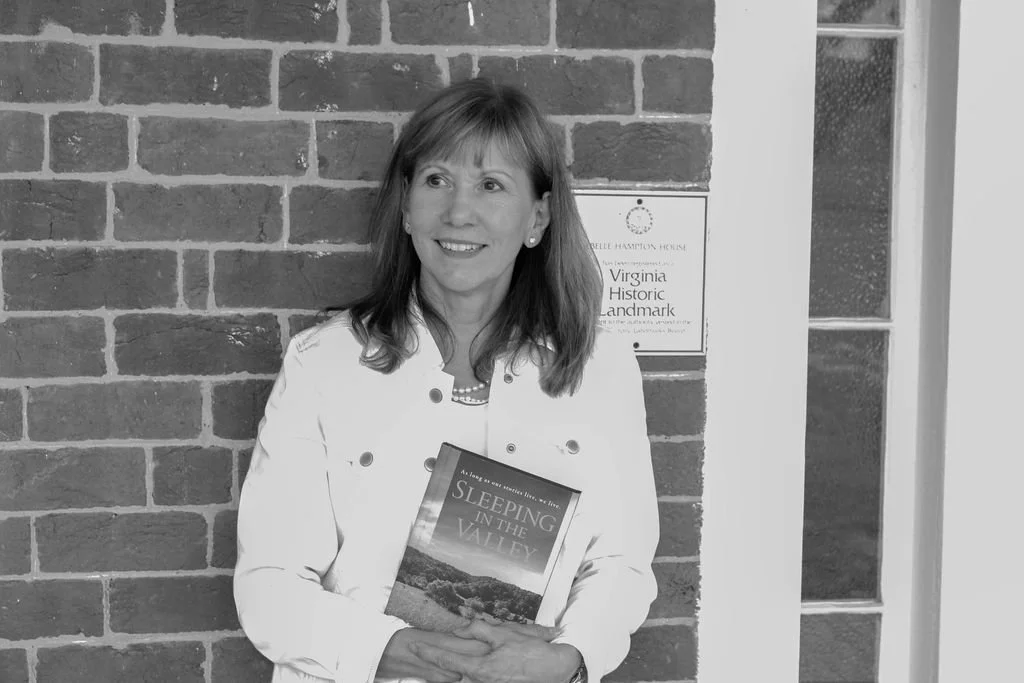
The World’s Worst Grandma: A Legacy of Free-Range Parenting Controversy
In the age of helicopter parenting and digital surveillance, one woman’s controversial approach to child-rearing has divided public opinion. Often dubbed the "world’s worst mom," her legacy stems from a bold embrace of free-range parenting, which encourages independence and resilience in children by granting them significant autonomy.
But that was then; let me take you back even further. In 1998, I was a mom living in the small town of Kearney, Nebraska, with boys aged five, six, and eight. I considered myself a protective mother, especially since my son begged me to let him stay home alone in third grade. Our neighbor's son, who was the same age, was often left at home alone, but I wouldn’t. In our community, it was common for kids to stay home alone as young as kindergarten. The principal at the school even offered "How to Stay Home Alone" classes aimed at fourth-grade students, but surprisingly, the classes were mostly filled with kindergarteners.
Ironically, while a law prohibited leaving children alone in a car, they were allowed to stay home alone, and in our small town, doors were rarely locked. But at the tender age of five, my kids could walk over to a neighbor's house by themselves, weaving through the familiar, safe streets. One day, they asked if they could venture to a boy named Billy’s house a couple of blocks away. Their dad casually said yes, not knowing we didn’t have any acquaintance named Billy. Panic set in when we couldn't find them, but relief washed over us when we discovered all three having the time of their lives at a new neighbor's house, completely oblivious to the chaos they had caused. It was a testament to their adventurous spirits and our community’s safety.
That wasn’t the first time I felt like a bad mom. Yes, I’ve forgotten my child a couple of times—once, I accidentally left our oldest at school, and another time at the soccer fields. Managing three kids is definitely a challenge, especially when they purposely run off while I'm distracted.
Once, I decided to test them by pretending to leave them alone in Walmart. They weren’t listening, so I thought it would teach them a lesson to see how they would react. I hid in the next aisle and listened as they developed a plan to handle being “lost.” They decided to go to the front cashier and ask them to announce their names over the loudspeaker so shoppers, including me, would know where to find them. They showed resiliency. How would your four and five-year-olds react?

Peyton, Tyler, and Mason, with the Principal
Embracing the “Boys Town” philosophy they practiced at the public school, which emphasized that children should earn positive and negative consequences for their actions, I enforced this with my boys during car rides. When they refused to settle down, I warned them that continued arguing would result in them having to walk home. True to my word, when they didn't stop, I pulled over and made them walk the three blocks home. That short walk proved more effective than any lecture; from that day on, they knew I meant business, and the backseat arguments ceased.
Fast-forward ten years, and I would also be labeled the World’s Worst Mom. But now, being the age of a grandparent, I might be labeled the World’s Worst. But let’s explore the unconventional methods, their impact on her family, and the societal reaction that sparked viral debates worldwide.
How to get the title "World's Worst Grandma"?
This title emerges from a legacy of courage and empowerment, where parenting philosophies dared to defy societal norms. To earn the name "world’s worst grandma" not through neglect but through an extraordinary role in fostering an environment of trust and independence. An unwavering support and encouragement shaped our child's bold, free-range parenting style, championing the belief that children thrive best when given the freedom to explore and learn from their experiences. An intentional and loving approach as a grandparent has ignited public discourse and inspired countless families to embrace a more liberated and resilient way of raising children.
The Origins of Free-Range Parenting
Free-range parenting is the brainchild of individuals who believe that children flourish best when given the freedom to explore and problem-solve without excessive adult interference. It originated in 2008 when New York columnist Lenore Skenazy wrote an article about letting her 9-year-old son ride the subway alone. At its core, it aims to:
Build confidence and resilience.
Encourage independent thinking.
Foster a strong sense of responsibility from an early age.
This method stands in stark contrast to the high-anxiety world of modern parenting, which often centers on closely monitoring children’s every move, even through home surveillance cameras or high-tech baby monitoring.
How Did Grandma Influence the Free-Range Movement?
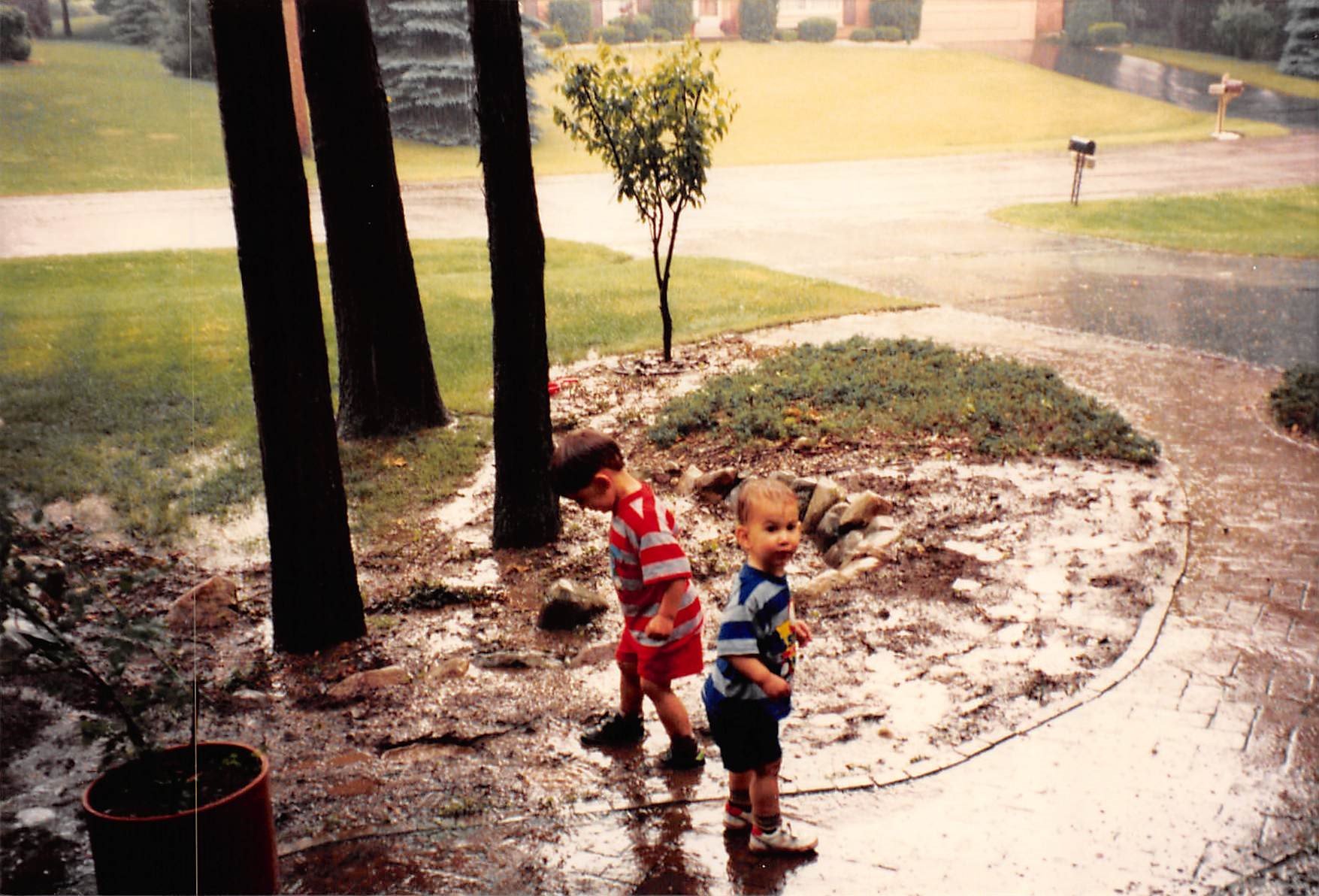
Tyler and Peyton, playing in the rain
The philosophy of free-range parenting often starts at home. As a mother, my hands-off but loving approach to raising children laid the groundwork for my parenting style. Although the term was never a thing in the 1990s, looking back on the independence I gave my children, it would bring the social media world to its knees. Although my children would say I was strict, I did allow them to play outside unsupervised, allow them to walk to the bus stop alone in kindergarten, get off the bus in third grade to an empty house while I was at work (with his brothers), and let them solve their problems without stepping in to “save them” (helicopter parenting).
Lessons Passed Down
Trust in Children: I believed in my children's competence and capabilities, often allowing them to navigate challenges without overstepping. This is how I was raised, and I am passing it down to my children, who will probably continue this style, depending on how the law permits.
Rejection of Fear-Based Decisions: Instead of succumbing to societal fears, I prioritized rationality and statistics, showing the importance of distinguishing real dangers from imagined ones. Although getting in the car with a stranger was a no-no, being able to talk to people using their best manners was encouraged.
Encouraging Exploration: Whether through unsupervised play or taking risks, my philosophy revolved around the belief that learning through experience was irreplaceable. Yes, they fall down when they are learning new skills like walking, rollerblading, and riding a bike. But they need to be encouraged to brush themselves off and get back on. As my dad used to say to my kids when they were cut, “Put some dirt on it.” Of course, that was just a joke to say it wasn’t that serious.
The Modern Parenting Dilemma
Modern society has increasingly embraced safetyism—a focus on mitigating every potential risk, often at the cost of independence. Critics of free-range parenting argue that:
It exposes children to unnecessary dangers.
It disregards community standards of care.
It may lead to legal consequences in some jurisdictions.
However, supporters counter these claims with evidence that overprotectiveness can hinder a child’s development. The role as parents are to raise adults, not dependents.
The Benefits of Free-Range Parenting
Research and anecdotal evidence suggest that free-range parenting offers distinct advantages:
Increased Resilience: Children learn to navigate failures and setbacks, building emotional strength.
Critical Thinking Skills: Facing real-world challenges fosters decision-making abilities.
Stronger Family Bonds: Trust and autonomy can strengthen parent-child relationships.
Real-Life Examples

Me in Kindergarten
Children who walk to school independently often display better spatial awareness and problem-solving skills. I started kindergarten at four years old, and yes, I walked home from school all by myself; it was a mile. Did I occasionally get bullied? Yes. Did it bother me? Sure. However, I survived. People say the world is more dangerous now, but statistics show it was more dangerous then. What changed? 24/7 news cycle.
Families practicing free-range parenting report higher levels of self-confidence. If you don’t allow kids to play and act independently with others, you are diminishing their resilience. Children need to learn how to interact with others and know they don’t need someone to solve their problems. This lack of self-esteem led our universities to have “safe spaces” and therapy dogs dealing with a higher level of mental health than prior generations.
Where Do You Stand?
The conversation invites parents and grandparents to reflect on their values and consider how much freedom is appropriate for their children. While there may never be a one-size-fits-all solution, the debate underscores the importance of adaptability and openness in parenting with grandparental influences.
Conclusion
The narrative of the "World’s Worst Grandma" and my free-range parenting journey might not resonate with everyone, but it compels us to reconsider modern parenting paradigms. This philosophy champions resilience over fear by empowering children to navigate the world with trust and autonomy. Whether you adopt or challenge this approach, the story is a powerful testament to how families can nurture the next generation. As an intentional grandparent, how will you approach this conversation with your children and grandchildren?