
St. Patrick's Day Through the Ages: A Family Tradition

Danny’s girls, Shannon and Carlie
The year was 1909, and thirteen-year-old Edward McLaughlin clutched his mother's hand as they walked through the crowded streets of Belfast on St. Patrick's Day. As the church bells chimed, Edward joined the procession through the village. They marched solemnly, reciting ancient Gaelic prayers and singing hymns in honor of St. Patrick, the patron saint of Ireland. On their walk home, Edward's father shared tales of leprechauns and mythical creatures that danced beneath the moonlit skies. The air smelled of fresh bread and damp cobblestones, and the sound of fiddles and tin whistles was heard from nearby pubs. It was a bittersweet day—soon, Edward and his family would board a ship for America, leaving behind the only home they had ever known. But for now, they celebrated. His father pinned a fresh shamrock to his coat, symbolizing their Irish pride. After Mass, they shared a simple meal of soda bread and lamb stew that evening, singing songs of the old country late into the night.
Now a father, Edward watched his eight-year-old son, Eddie, run excitedly down Jeferson Avenue, waving a green paper shamrock he had made in school. St. Patrick's Day had taken on a new form in America, but the heart of it remained. The Irish community in Detroit gathered for a grand parade, marching with pride past storefronts decorated in green and white. Watching as soldiers, pipe bands, and dancers marched down Jefferson Avenue. Eddie and his brother waved small Irish flags as his father lifted him onto his shoulders for a better view. That evening, his family gathered at his uncle's home, where laughter and music filled the air. His father and uncles sang old Irish ballads while his mother and aunts prepared a corned beef and cabbage feast—a tradition they had adopted in the States. The holiday was a solemn nod to faith and a joyous celebration filled with laughter. The radio played Irish ballads, and his father told stories of Ireland and the journey to America.
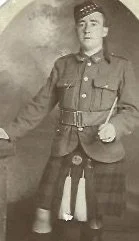
Edward 1917
Fast-forward, eight-year-old Danny sat on his father's shoulders, looking out over the sea of people at Detroit's St. Patrick's Day parade. The floats were bigger, the music louder, and the crowd more diverse than in his grandfather's time, but the celebration still honored the same Irish roots. Danny marveled at the diversity of the crowd, a mosaic of Irish Americans and people from every corner of the world, united in their love for all things Irish. His father pointed to a group of men wearing sashes and said, "Those are the Hibernians—men like your grandfather who came here looking for a better life."
Later, back at their home, Danny's grandmother still cooked corned beef and cabbage, and his uncles passed around pints of Guinness and nips of Jameson. His great-uncle Jim pulled out a fiddle, and before long, the whole family was clapping and singing along. Danny listened as his grandfather reminisced about the old country, and his father talked of growing up in an Irish household in Detroit.
Though the years passed and traditions evolved, my family never lost sight of their heritage. Whether in Belfast or Detroit, in small kitchens or grand parades, St. Patrick's Day remained a time to celebrate family, faith, and the enduring spirit of the Irish people. Across generations, from the quiet villages of Ireland to the bustling cities of America, St. Patrick's Day has remained a testament to heritage and community. Each era brought its own flavor to the celebration, weaving together the threads of history and culture that bound through the ages.
How does your family celebrate and carry on the traditions that mean the most to you?