Put Your Hands-In-Your-Pockets Grandparenting

"Helicopter Parent" is a term used to describe parents who constantly monitor their children's actions and decisions. Similarly, "Bulldozer Parent" is a parenting style where parents actively remove obstacles from their child's path, which can hinder their independence and ability to cope with adversity. This can apply to grandparenting, too. However, have you ever heard of “Hands-In-Your-Pockets” Grandparenting? We coined this term to remind grandparents that you shouldn’t give cash to your grandchildren without meaning or purpose. Instead, keep your hands in your pockets and see what lessons can be taught to the rising generation.
When our boys were little, we often visited the Jelly Belly factory outside Chicago. You were right on the floor with the candy-making process at that time. Our guide would state the number one rule, “Don’t touch or take anything.” Since most kids might be tempted to swipe a sweet toasted marshmallow or tutti-frutti bean, our guide suggested that the kids put their hands in their pockets to avoid temptation. So our advice to grandparents, even though you are tempted to give your grandchildren whatever they want, is to take a minute with your hands in your pockets to ponder a life lesson to be learned.
My parents gave my kids everything they couldn’t get at home, like soda, ice cream, hotdogs, rice crispy treats, and Jello. That is fine; spoil them with special delights. That isn’t what I am talking about here. It is when the child is financially given things, like when they ask for money or expensive items, that they should be working or saving to buy.
My parents always gave the boys a fifty-cent piece when they visited. These were real silver coins dated 1969 or earlier. But the lesson was not to spend it on candy or gum; these valuable coins were to be saved for the future. They learned not only about coin collecting but also about delayed gratification and the value of savings.

Book Recommendation
“But I want it!” It might be the reason your three-year-old grandchild gives for getting a new toy. Or, “Everyone has designer purses” could be something your teenage grandchild says. When asked what they want this year, they say, “I want to go to Paris for my 16th birthday.” When considering what to do, put your hands in your pocket and think about what lesson can be taught here.
Remember, it isn’t about the money. Sure, you worked hard and could afford all of these easily. But now they need to learn that money doesn’t grow on trees. If the three-year-old wants a toy, do they have skin in the game? What can they contribute to the payment? Might they have a piggy bank, birthday money, or extra chores they can do to earn money? If you are visiting with them for a couple of days, go home from the store and see about a plan to earn at least part of the toy.
Maybe they agree to pay half if they can earn the other part. Chores like feeding the dog, making their bed, and picking up toys are all things a three-year-old can do easily. But don’t reward them extra if they already do that daily. Get creative, but within reason. Our son was three when he opened a lemonade stand. He made the sign, but I helped with the spelling. I also helped him make the lemonade, but he set the price. A quarter for a cup since he knew his coins, it was easy.
It also could be a lesson on charity. If the youngster wants a new truck and already has 10 of them, which one would he select to give to a needy family? The same goes for the teenager wanting a new designer purse. Ask what clothes, shoes, or purses they wish to donate.
When giving a big gift like a trip, it is essential to set boundaries. Simply planning the trip and expecting the recipient to show up doesn’t teach any financial lessons. To ensure a good example, have the recipient organize it so that they can see what everything costs. You can set a budget, and they can decide where to spend it. Finding out why the destination is essential to them is also vital. They may find that their desired location didn't fit their budget or wasn't necessary to them. It is possible that they just thought it would sound cool to their friends.
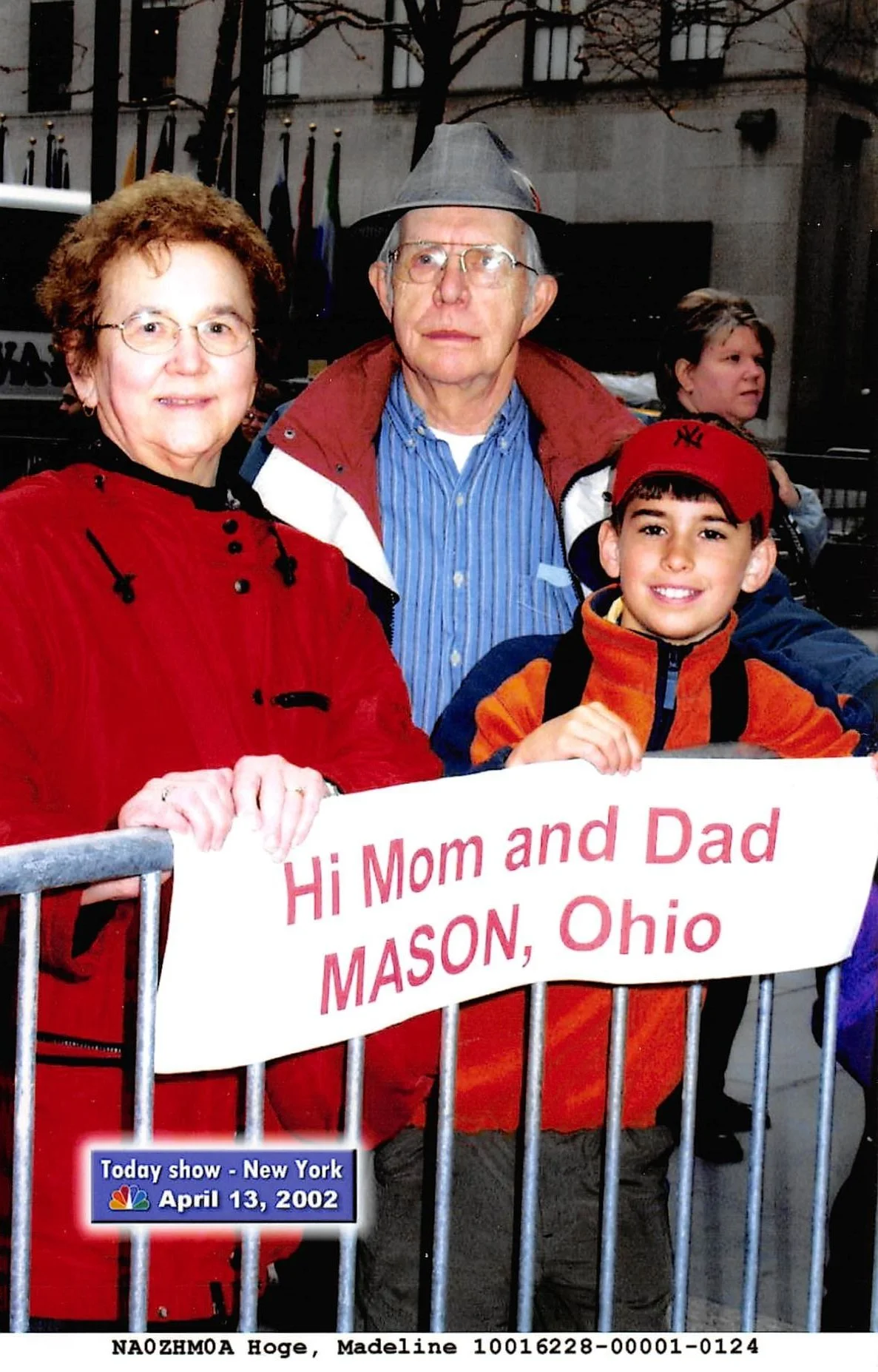
Tyler with Grandmother and Grandfather in NYC
My parents volunteered to take their grandchildren on a trip to spend time with them and make memories. This was a grandparent's weekend when the grandkids were about thirteen years old. Each one would get a special weekend with Grandmother and Grandfather at a place of their choice. Some thought big, like New York City or Disney, while others thought smaller and more local. Those trips are unique, one-time trips and memorable times. Maybe too young to plan it, but still having some guiding principles and asking, “Why is the destination important?” In this case, a budget for daily expenses is reasonable. Rather have a souvenir than that dessert, sure. They were learning to make choices in a world of overindulgence.
If you just became a first-time grandparent or have not yet had any, this is a great time to think about becoming a "Hands-In-The-Pocket” grandparent. What lessons do you want to pass on regarding money? Remember, it is easier to plan ahead than to play triage in the midst of “But I want it.” But don’t worry if you have that twenty-something grandchild; you still have a chance to inspire your fiscal lessons. Just keep your hands in your pockets.