Having a Grandbaby? It’s Like Riding A Bike, Right?
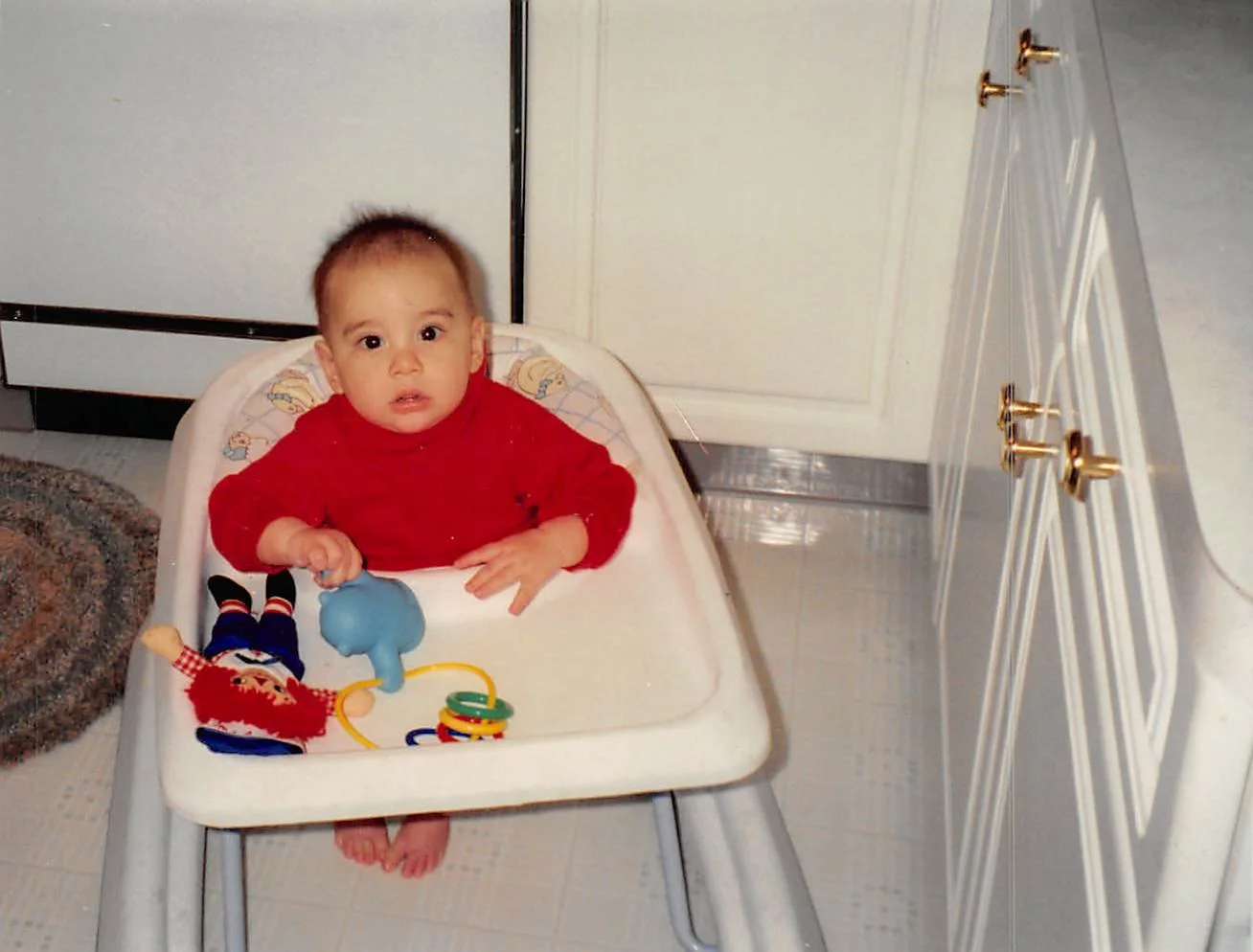
Mason in a bouncy seat
If someone retired from a job 35 years ago, can we really expect them to perform at the same level today? With all the technological advancements and new psychological research, how can a grandparent keep up with the latest developments in child-rearing?
No Such Thing as a How-To Book
Although there are no definitive “how-to” manuals for raising children, parents have succeeded since the beginning of time. Our parents had Dr. Benjamin Spock, whose book “The Common Sense Book of Baby and Child Care” (1946) revolutionized parenting advice by promoting a balanced, child-centered approach.
I used “What to Expect the First Year,” which has become the world’s best-selling and most beloved guide, with nearly 12 million copies in print. It offers valuable guidance on the many things babies don’t come with instructions for but certainly should.
Parenting resources have evolved over the years. While "What to Expect the First Year" was revised in 2024, the most trusted guide today is "The Happiest Baby on the Block" by Dr. Harvey Karp. His method includes four key concepts:
1. The Fourth Trimester: Babies still crave a womb-like environment after birth.
2. The Calming Reflex: An "off switch" innate to all babies.
3. The 5 S’s: Five simple steps to activate the calming reflex.
4. The Cuddle Cure: Combining the 5 S’s to soothe colicky babies.
Cloth, Disposable to Gender Neutral

Tyler, six months old
Since disposable diapers didn’t come into use until 1961, my sisters wore cloth diapers secured with large safety pins, which were pink for girls. However, because disposable diapers were expensive, cloth diapers remained my mom’s primary choice when I was born. Those cotton squares weren’t distinguished between boy or girl except for the safety pin.
When our boys were babies, I sought advice from my mom and aunt. My mom had raised five girls, and my aunt raised six boys, so they had plenty of experience. I was clueless about how to change a diaper, especially for little boys, who have a tendency to "christen" the changing table! Fortunately, disposable diapers became advanced, allowing you to select the type based on whether the baby was a boy or a girl. The brands that didn't differentiate between sexes often failed due to leakage. My go-to brand was Luvs for boys, which rarely soaked through.
There is currently a resurgence in the use of cloth diapers due to growing environmental concerns. However, many new parents still prioritize convenience, which has led to the emergence of biodegradable diaper brands. It’s important to recognize that parents go through a significant number of diapers, prompting the rise of the Diaper-Free Movement. This movement promotes elimination communication (EC), a method that emphasizes early potty training and reduces diaper usage, appealing to parents looking for alternative approaches. Additionally, modern disposable diapers are typically unisex, moving away from the gender-specific designs that were popular in previous decades. Personally, I view this trend as a temporary shift that may revert to traditional practices once parents face the reality of dealing with messes.
Sleeping Trends
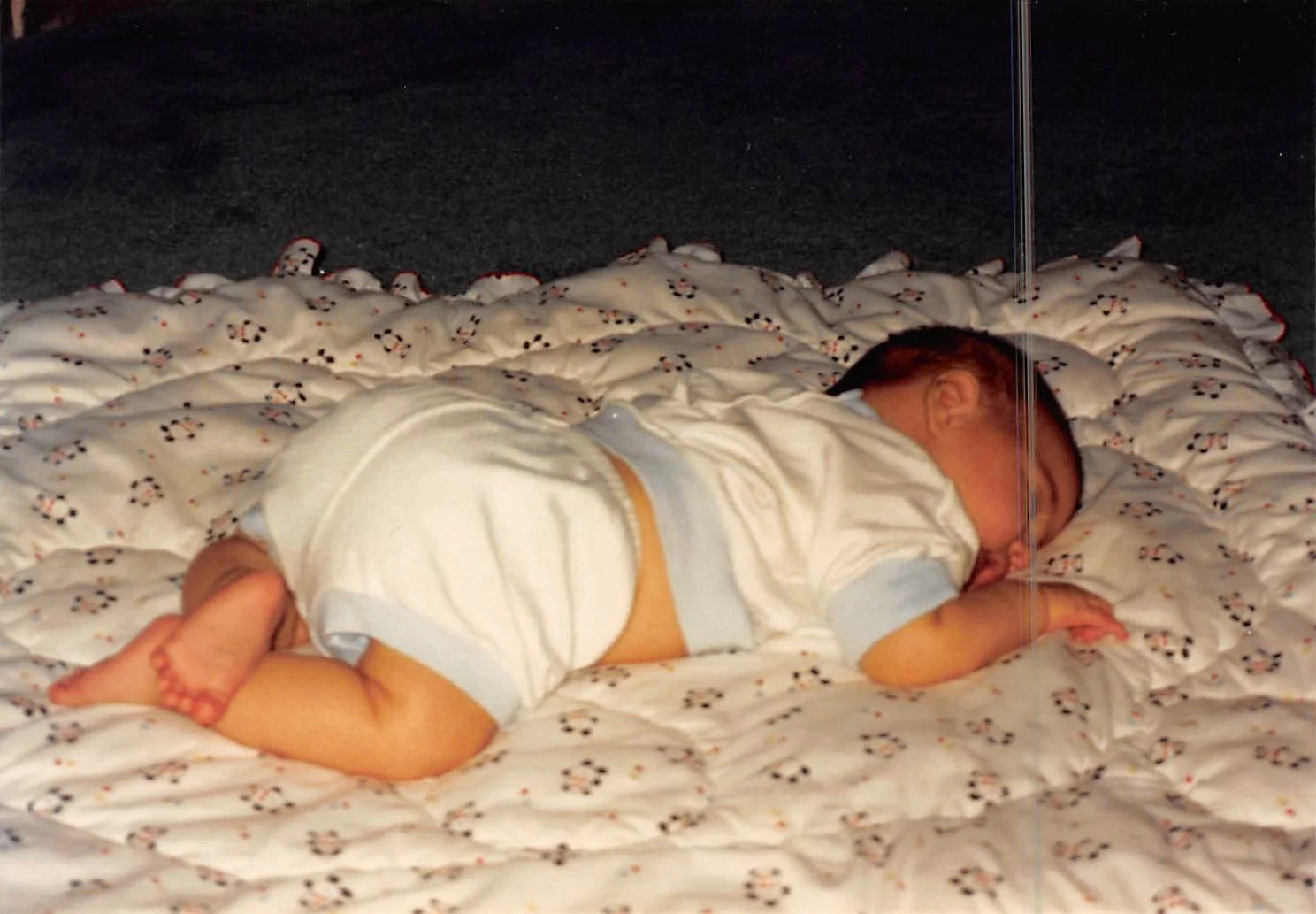
Tyler, two months old
We survived the hazardous cribs of our early years. These cribs had slats spaced wide enough for a baby's head to become stuck. My parents placed me on my tummy, believing that if I spit up, I wouldn't choke if I was on my back. They didn't realize the danger posed by the slats. As a newborn, I started in a cradle before transitioning to a crib, where I remained until I was four years old. I was so well trained to stay in my crib that I wouldn't even get out when the side rail was lowered.
Now that the crib safety has improved, they moved on to other sleep recommendations. The advice for infant sleep positions has changed significantly over time, even among my own children, who are only three years apart. Our oldest child slept on his stomach, and by the time he was two weeks old, he could wriggle out of his swaddle and flip himself over. However, when our middle child was just two months old, the guidelines shifted to advise that infants should sleep on their backs to reduce the risk of Sudden Infant Death Syndrome (SIDS). Our youngest, however, would become extremely upset when sleeping on his back, so we had no choice but to let him sleep on his stomach, which led to many sleepless nights for us as parents.
A common recommendation for getting children to sleep is to let them "cry it out" instead of coddling them. However, that approach was not successful for us, especially with our youngest, who would cry so hard that he would throw up. Letting him cry it out was simply not an option. Since we had cute bumpers and blankets, it would be a big mess to clean up. He never took a pacifier so to keep him entertained, a child's musical mobile was kept in the crib. The drop-down bar on the crib was also very helpful for my heavy little one.
Today, there should be a crib equipped with a no-gap mattress and a tightly fitted sheet. The slats of the crib are spaced appropriately, and drop-down sides have been outlawed. Bumpers, blankets, and toys are not allowed in the crib. Babies sleep in wearable blankets on their sides or backs. The crib is placed away from windows, cords, blinds, or any other hazards. It is recommended that the crib be located in the parents' room until the baby is six months to a year old. Babies are permitted to have a pacifier and that is it.
Monitoring Gone Wild
Our parents never had baby monitors. According to my sisters, my mom would leave me outside by the window to get fresh air, even in January. During the early to mid-20th century, tuberculosis was a significant health concern, and it was widely believed that fresh, cold air could help reduce the risk of infection. To keep an eye on me, she would send my 8- and 9-year-old sisters to check on my well-being. I looked it up, and the year I was born was one of the coldest winters in Chicago. No wonder I dislike the cold! And sending a child to check on me was considered a solution?
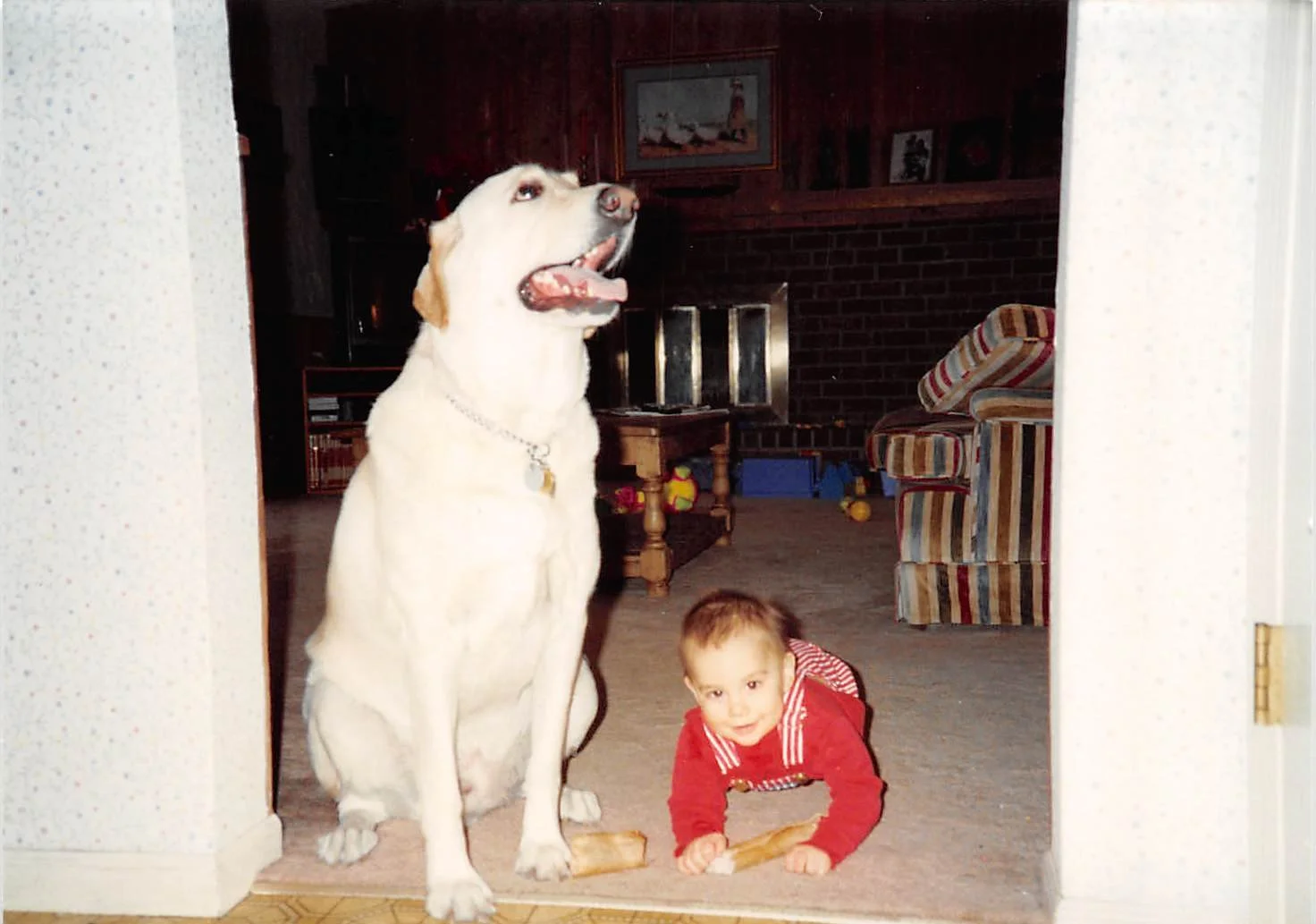
Mason and our baby monitor, Sheldon
During the 1990s, baby monitors became a staple for many parents, including us, as we navigated the challenges of raising our children. These devices were simple yet essential; they transmitted sound without the benefit of video, creating a sense of security as we went about our day. However, their range was often limited, which could lead to some amusing situations. I distinctly remember times when our dog, ever vigilant and attuned to the household, would alert me to a baby's whimper or cry long before the monitor picked it up. It was almost as if our furry companion had a sixth sense, especially when I wandered too far away from the reception area, leaving me to rely on the dog's instincts while I enjoyed moments of freedom.
Today, video monitors are equipped with infrared night vision, allowing parents to see their baby clearly in low-light conditions without interrupting their sleep. Some monitors even track the baby's breathing and movements. Additionally, certain models offer two-way communication, enabling parents to soothe or reassure their child without needing to enter the room. Parents can also monitor their baby remotely to observe caregivers.
However, it is generally recommended to stop monitoring around 18 months or when the child can alert you if they need help, such as when they are sick or need a glass of water. Of course, some circumstances may warrant extended monitoring, such as specific health conditions or parental anxiety, which can lead to a desire for closer supervision.
Conclusion

Madeline and Charlotte
Grandparents, it is important to stay informed about the latest recommendations for caring for new babies. While some practices may seem excessive, gaining the trust of your children to watch their kids requires you to be up to date on current trends. Your experience raising your own children is invaluable, but just like a bike that now comes with new gadgets, parenting also evolves. Remember, you did not wear a bike helmet in your day, but safety should always come first.