From Card Catalogs to ChatGPT: A Journey Through Libraries and Technology

UVA Board Room in the Rotundra
A Campus Visit Turned Time Capsule
On a recent trip back from Richmond, VA, we stopped to visit a family friend at the University of Virginia. She served as our guide, viewing the campus through fresh eyes as a new freshman student. The tour, of course, included the iconic Rotunda. Although we had often seen it from a distance on past trips, we had never entered the historic structure until now. A hush fell over everyone as we peeked into the boardrooms and cozy study spaces.
Libraries Reimagined: From Research Havens to Sleek Study Hubs
As we continued the tour, we visited the popular study spots, the libraries. No longer cluttered with stacks of books to check out, the books were instead displayed behind locked, ornate cabinets. As I passed the wooden card catalogs, I questioned why they were still there. However, when I tried to open one, I realized that it was for display purposes only. Our freshman tour guide said, “Yeah, what are those for anyway?”
Meet Gen Z: Digital Natives in a Physical World
This was my stark awakening to Gen Z, also known as Zoomers, iGeneration, Digital Natives, and Centennials. My kids are considered Millennials. They still had card catalogs and encyclopedias. Libraries were filled with books to peruse. This led me to reflect on what life was like before the internet — a life that Gen Z is blissfully unaware of.
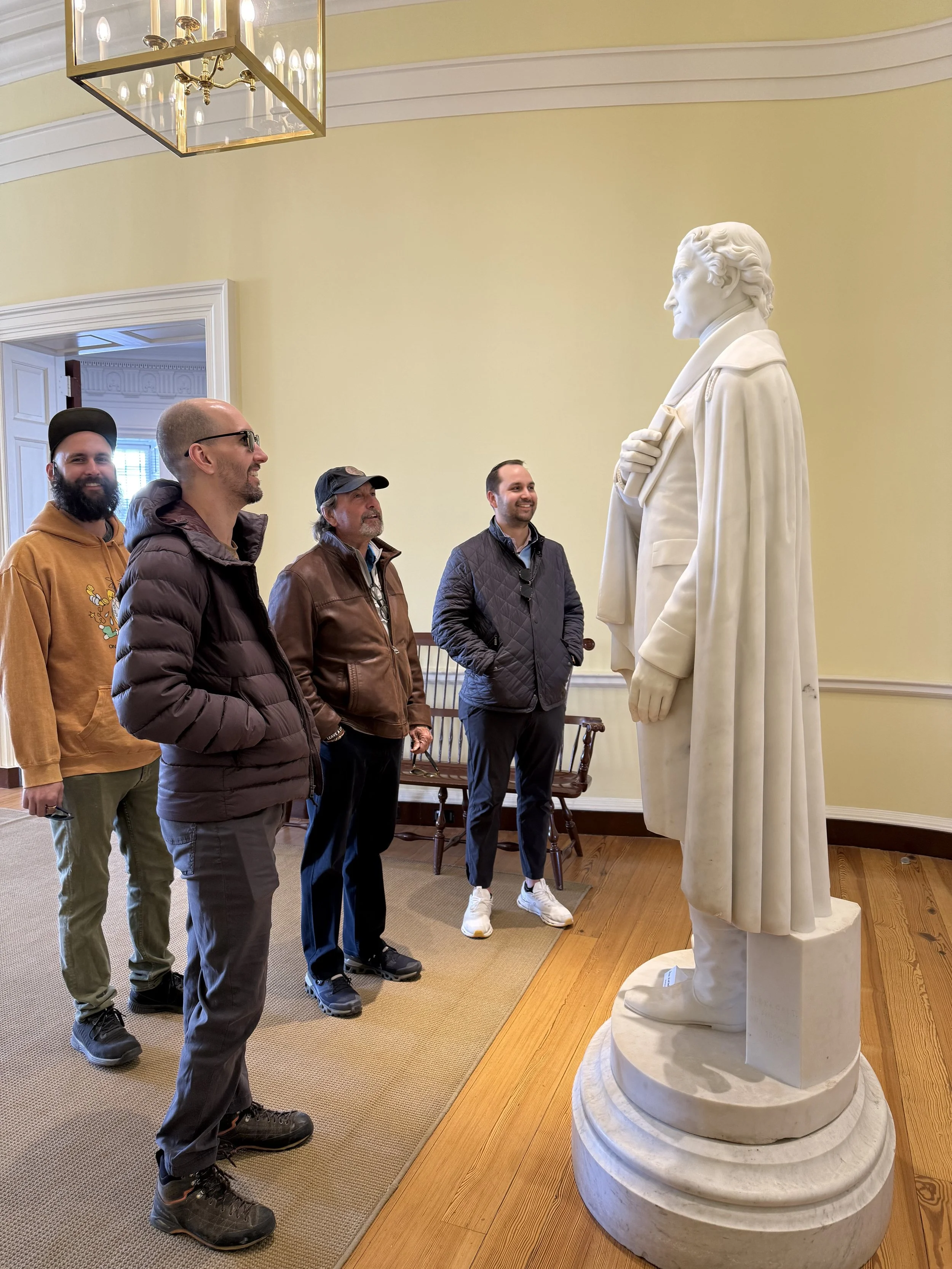
Thomas Jefferson statue at UVA
Millennials and the Magic of the Library
When our oldest son was in elementary school, libraries were an exciting place filled with a wealth of information. With his ADHD, he would get lost in the research of anything, but mainly science. Blackholes were of particular interest — which is what the library turned into for him as it sucked him into the knowledge that came from reading, learning and discovering.
From Blackholes to Bell Rings: A Personal Library Tale
He would lose track of time, unaware of the bell signaling the end of library hours and the return to class. While all the other kids checked out their books and headed back, our son remained surrounded by stacks of books, uncertain which one to choose from the many that intrigued him. With the librarian's assistance, they would select one and send him on his way.
Tables Over Tomes: The New Study Space Debate
As we toured the libraries on the University of Virginia campus, we eventually came across the typical shelves of books. Our guide lamented how those books consumed valuable study space. It limited the number of tables, leading to overcrowding during exam preparation time, which we used to call "dead week." Why all the books anyway?
Back in My Day: Georgia Tech’s Bookish Beginnings
My thoughts drifted back to my own college days at Georgia Tech, where I met my husband. The library had an abundance of books lining the exterior of the central section. Inside, there was an open space filled with tables for working with other students and engaging in study groups and class preparation. However, upon our return to our alma mater, we discovered that its library had undergone changes as well.
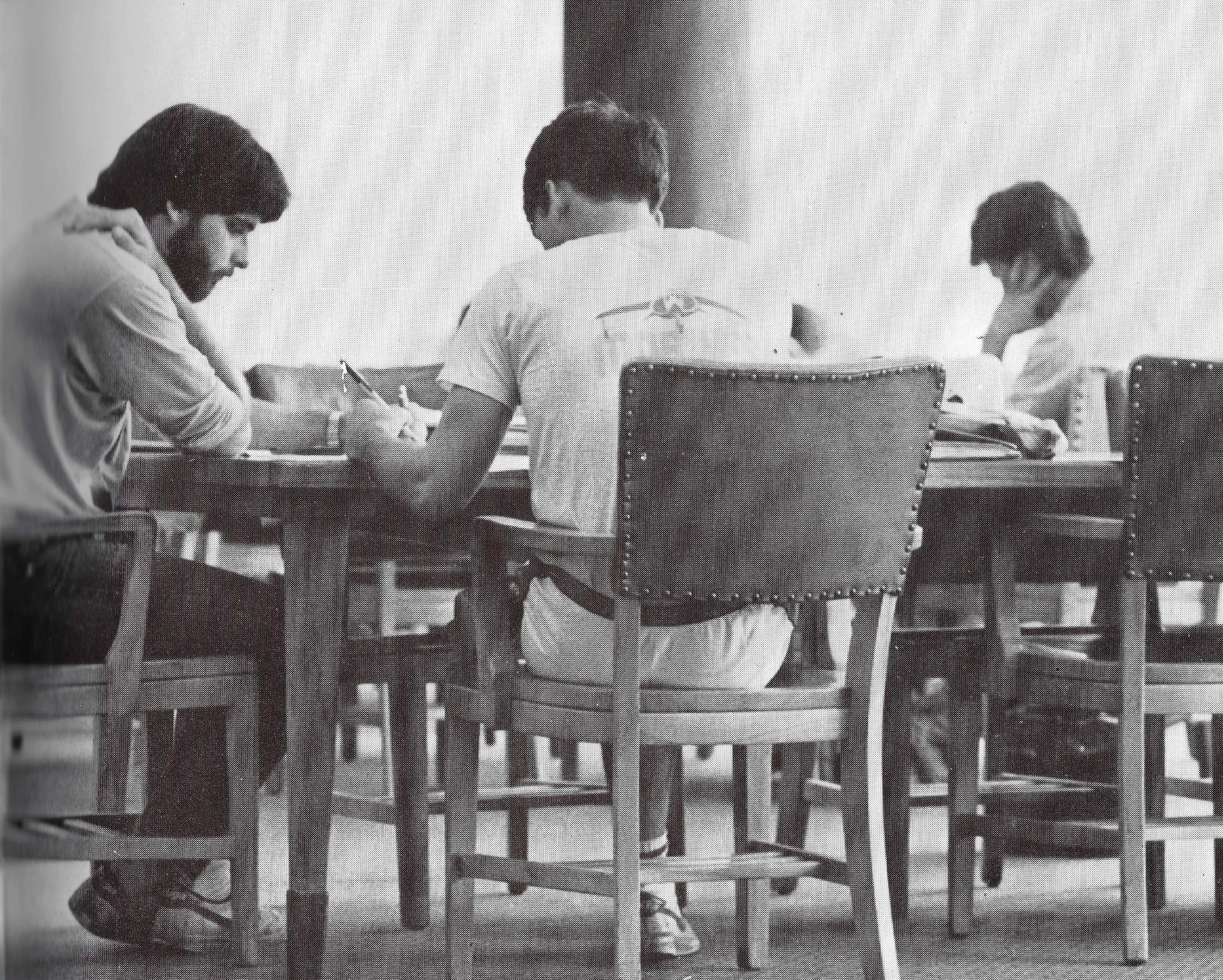
Georgia Tech Library, 1984
Security Gates and Screens: Libraries Get a Makeover
As I stepped into the library, the unfamiliar sound of the metal detector chimed. Almost immediately, a security guard approached, requesting my ID. I mentioned that I was an alum, eager to nostalgically wander through the stacks. Fortunately, since I seemed harmless enough, he permitted me entry. However, what awaited me inside was a far cry from my memories.
The Soundtrack of the ’80s: When Tech Was Born
Gone were the towering shelves brimming with books; instead, I found fewer volumes nestled between high-top tables laden with an array of sleek computers. In my day, such modernity was confined to computer labs, a testament to the rapid evolution of technology. Students, encased in their individual worlds of studies, surrounded me, many wearing headphones or earpieces, likely to mute the whispers of collaboration. The only trace of familiarity was the brown speckled tile floor, now worn and faded, that echoed the passage of time.
We Didn’t Start the Fire: A Tech-Time Remix
The world as we know it has undergone a dramatic transformation. In the 1980s, we were pioneers in the realm of technology, experimenting with groundbreaking innovations. My classmates were busy crafting speech synthesis — bringing to life the ability to replicate human speech — and developing voice recognition software that was ahead of its time. Fast forward to today, and children can effortlessly engage with devices like Alexa, seeking answers to their every whim and curiosity. Just imagine the endless "why" questions a spirited three-year-old might unleash on such a gadget! But I digress; the evolution of technology is a fascinating journey unto itself.
Alexa, What’s the Future? Imagining 2050
Thinking of the advances of technology in the last 25 years reminds me of the remake of the song, “We Didn’t Start the Fire.” Here is my own version of the song with the advancements in technology:
Dot-com crash, broadband flash, SMS and iPod stash, Genome mapped, MySpace craze, YouTube born, those early days. iPhone drops, we swipe and scroll, Social feeds take full control. Bitcoin buzz, Tesla race, Streaming wars and cloud-based space. Zooming through pandemic years, AI grows and stirs new fears. ChatGPT and rocket skies, Neuralink and quantum rise. We didn’t start the fire, Tech kept turning, minds kept burning. We didn’t start the fire, From flip phones to AI—just keeps learning.
Okay, it won’t be on the Top 20 Hits list, but recalling the advances is the point of the song. Now how about in 2050, twenty-five years from now, what will technology bring?
From Browsing Books to Brain Chips: What Comes Next?
I asked ChatGPT, and this is what it said:
“Technology is expected to evolve in ways that feel almost magical today. We may see widespread use of artificial general intelligence (AGI), capable of reasoning and learning like humans. Brain-computer interfaces could allow people to control devices with thoughts, while quantum computing unlocks breakthroughs in medicine, climate modeling, and encryption. Personalized healthcare powered by genomics and nanotechnology might detect and treat diseases before symptoms appear. Autonomous systems—from flying cars to robotic caregivers—could become part of daily life. Meanwhile, sustainable tech like clean energy grids, lab-grown materials, and precision agriculture may help tackle climate change. The physical and digital worlds will likely blur further with advanced augmented and virtual reality, creating immersive experiences for work, education, and connection.”
Reflection, Nostalgia, and the Road Ahead
As we take a moment to reflect on the past years and acknowledge the significant changes we've experienced, let's set our sights on the horizon ahead. Buckle up, because the journey into the future promises to be an exhilarating ride!