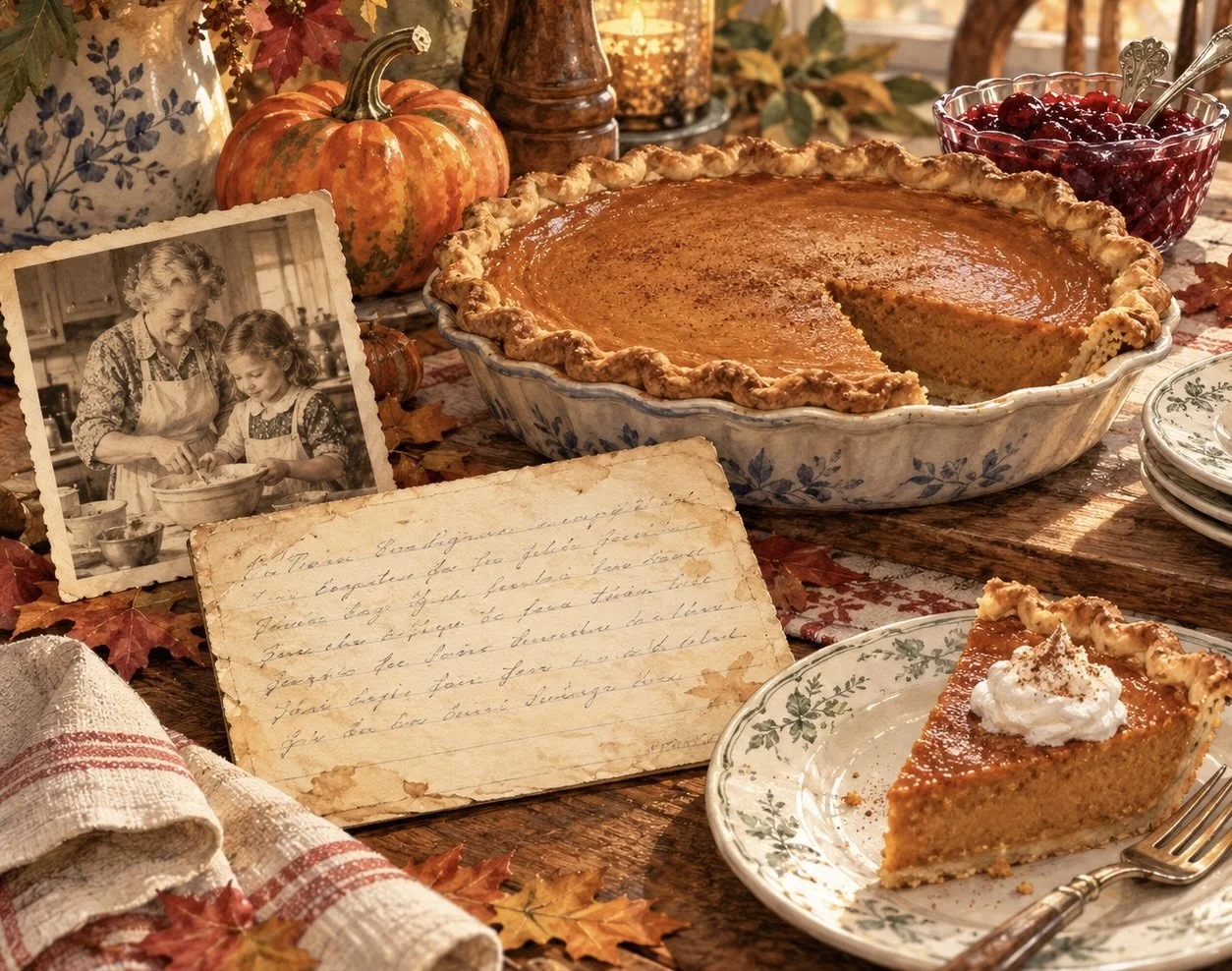
Before the first bite of Thanksgiving dinner, something wonderful often happens. Someone lifts a casserole lid, catches a familiar scent, and says, “Remember when Grandma used to make this?”
Suddenly, we’re sharing more than a meal. We’re sharing a memory.
Our Thanksgiving favorites carry stories tucked between their ingredients. A handwritten recipe, a chipped serving bowl, or an unexpected addition to the stuffing can open a conversation that connects generations. This November, consider making those stories part of your celebration.
Every Dish Has a Beginning
Perhaps your cranberry sauce comes straight from a can, complete with those familiar ridges. Maybe your family insists on homemade rolls, or someone guards the secret to perfectly seasoned gravy.
Whatever lands on your table, ask: How did this become one of our Thanksgiving favorites?
The answer might involve a grandparent’s kitchen, a neighbor’s kindness, a recipe clipped from a newspaper, or a cooking mistake that became a beloved tradition.
Children may know which pie they love without knowing who first baked it. Giving that pie a story helps them see the people behind the food.
Try asking, “Who taught you to make this?” or “Did you eat this when you were little?” Then leave room for the conversation to wander.
Invite Little Hands and Curious Minds
The kitchen offers plenty of opportunities to share words, ideas, and laughter.
Invite children to read an ingredient label, find the word “butter,” or help follow a recipe. Younger helpers can describe how something looks, smells, or feels. Is the dough sticky? Are the cranberries smooth? What does cinnamon remind them of?
Talk about cooking words, too. “Fold” means something different when you’re working with batter instead of laundry!
Keep expectations simple. A child who tears lettuce, counts potatoes, or stirs a bowl has contributed something meaningful.
And if flour lands on the floor? That may become next year’s story.
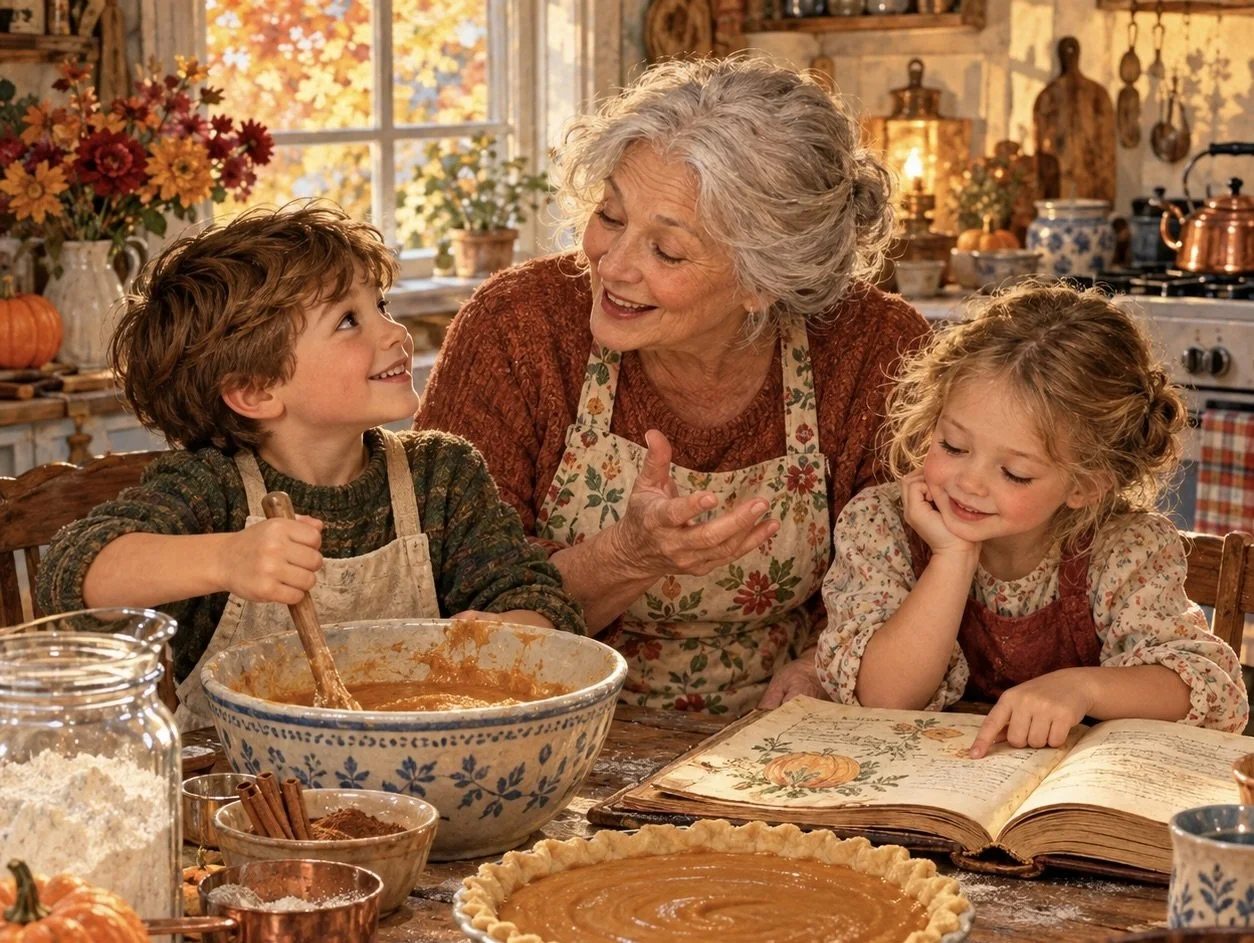
Save a Story Alongside the Recipe
Recipes tell us what to add and how long to bake. Family stories tell us why we keep making them.
This year, write a few sentences on the back of a recipe card. Include the cook’s name, a favorite memory, and any advice they always offered.
Let children illustrate the dish or write their own review: “Grandma’s sweet potatoes taste like dessert pretending to be dinner.”
With permission, record a relative explaining a recipe. Their laughter, expressions, and little reminders may become as treasured as the finished dish.
Leave Space for Something New
Traditions grow when new people and ideas join the table.
Let a child choose a side dish, invite a guest to share a family favorite, or give a new recipe a wonderfully silly name.
Not every experiment will earn a permanent place on the menu. That’s part of the fun. Even the biscuits that resemble hockey pucks can leave everyone laughing.
As Thanksgiving approaches, think about one story you’d like to hear and one you’d like to pass along.
You don’t need a perfect meal or a beautifully arranged table to begin. You need a little curiosity, someone willing to listen, and a question:
What dish tastes like Thanksgiving to you, and whose story does it tell?