The 7-Minute Nightly Ritual: One Book, One S.P.A.R.K., One Memory

For modern grandparents (and parents) who want a simple reading routine that sticks.
A quick story (failure & regrouping)
Last winter, I tried to be the “perfect grand.” I arrived with a bag of books, a reward chart, and a 20-minute plan. What could possibly go wrong? Well… everything. My grandson wriggled, I rushed the pages, and by night three, everyone dreaded “Carma’s reading time.” I could feel it—the sigh before I sat down, the way he slid off the couch, the tight smile I put on anyway. So, I scrapped the plan and asked myself, What am I actually trying to build here? Love of reading, of course. Confidence for kindergarten, yes. But most of all, a warm conversation—one we both look forward to. That’s when “one page, one SPARK, one reflection” was born. Seven minutes. No stickers, no charts. On night two, he said, “Can we do our question again?” That’s when I realized small beats grand every time.
Why a tiny ritual works
This small win stuck, and we’ve continued it. I might go as far as saying that it’s almost a tradition that I’ll have to continue with his little sister. A short, predictable rhythm builds attention and language without a battle. One question means the child does the thinking—SPARK turns reading into a real conversation, not a worksheet. And it’s easy to keep going when grands and parents share the same three steps, whether we’re across town or across time zones. As one intentional grand told me, “We kept it short, and it finally stuck.”
The 3-Step / 7-Minute Routine
1) Pick a page (about 2 minutes)
Open tonight’s book and choose one page that catches your eye. Busy spreads are perfect—where there’s a lot to notice, there’s a lot to talk about. You don’t need a plan; the page is the plan. Some nights, I let my grandson choose the page by closing his eyes and pointing. Other nights, I pick a page that fits our mood: a silly picture after a hard day, a calm scene when bedtime is already late. The secret here is to lower the bar so the ritual begins easily. When a routine is simple to start, it’s simple to sustain.
Pro tip: if you’ve got a wiggly kid, begin standing. Let them pick the page while they’re on their feet, then sit together. That little bit of motion dissolves restlessness before you start.
2) Ask one SPARK prompt (about 3 minutes)
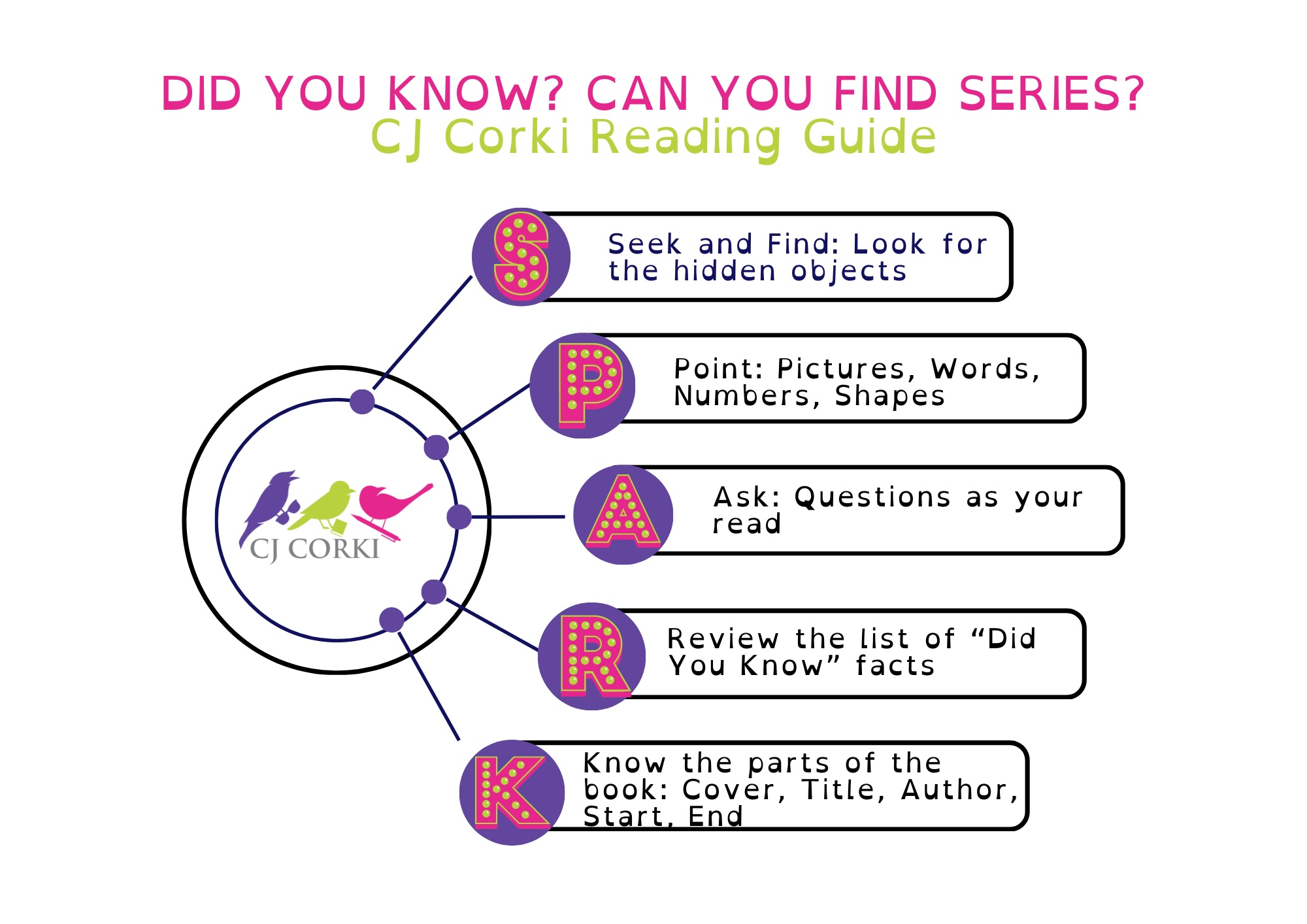
Use one open question, then pause. Let the child do the talking. The pause is where the learning lives; it makes room for their idea to arrive. Choose a prompt from the five SPARK moves and keep it playful:
SEE (Seek & Find): “Spot one tiny thing I would miss.”
POINT: “Point to a shape—where else do we see it at home?”
ASK: “If you were in this picture, what would you try first?”
REVIEW: “Pick one ‘Did You Know?’—how could we see this at home?”
KNOW (book parts): “Show me the title; where do we start reading?”
That’s it—one question. No barrage, no quiz. If they answer with a whisper, smile, and wait. If they answer with a monologue, let it live. Either way, you’ve started a conversation that belongs to them.
What if you’re on video chat? Hold the book close to the camera and say, “Tell me when to stop panning.” Once they say “stop,” that’s your page. The simple act of control—you chose the page!—makes kids lean in.
3) Reflect once (about 2 minutes)
Echo their idea to stretch thinking. This part is small but mighty. A single reflective line says, “I heard you,” and then hands the thinking back.
“You noticed the little lantern—what makes you think it matters?”
“You’d cross the wobbly bridge—why that first?”
“You think the marshmallows are a clue —what should we check next?”
After one reflection, end while it’s fun. Close the book, high-five, lights out. The goal isn’t to wring every ounce out of the moment; it’s to end with a feeling that makes tomorrow’s moment easy to begin.
Helpful hints for the “uh… now what?” moments
Praise effort. Lead with something like, “I love how you explained that.” Effort-praise tells kids that thinking—not being right—is the point.
Offer choices. If they stall, give two possibilities: “Because it’s loud… or it’s new—or something else?” Choices invite a third idea: their idea.
Invite action. When words are tricky, skip to movement: “Show me with your hands how it moves.” Action often unlocks language.
If you’re reading with a child who is shy, use a non-verbal first turn: “Point to the thing that made you curious.” Then reflect on the point itself: “You picked the tiny footprint—why that one?”
Grand + Parent Team Play (simple text handoff)
I found that routines survive when adults share the same language. Here’s the quick handoff I use so storytime stays consistent—whether we’re across town or across time zones.
Grand → Parent: “SPARK answer: ‘Small marshmallows melt fastest.’ Follow-up: ‘How could we test that?’”
Parent → Grand: “Tried it—small vs. big in hot cocoa. Small melted first!”
A tiny text like that does three things: it celebrates the child’s idea, it shows the next adult how to follow up, and it keeps the ritual alive across homes. If you’re co-parenting or many miles apart, this micro-handoff becomes a bridge. Kids notice when the adults in their world are speaking the same language—and they relax into the routine.
More handoff ideas
“Tonight’s SPARK: ‘The moon would camp in our yard.’ Ask: ‘What makes you think that?’”
“We did KNOW tonight—she found the title and showed the start spot!”
“Picked a SEE—he found the tiny lizard under the leaf.”
When things go sideways (30-second fixes)
Bad day? Tired night? Welcome to real life. Keep these pocket fixes handy:
“I don’t know.” Try, “Let’s guess together—A or B—or your idea?” (Many kids need permission to try a half-idea out loud.)
Wiggles. Use a doing prompt: “Show me the sound this page would make.” You’ll often get a giggle and an answer.
Too late. One page, one prompt, cuddle. Done. Tomorrow still counts.
If the energy is truly off, shift to a five-line “picture talk”: “Tell me one thing you see… one color… one shape… one feeling… one idea.” Five “ones” equal one routine.
What SPARK develops (without turning storytime into school)
Attention & memory: looking for tiny details (SEE) and naming book parts (KNOW) strengthen visual tracking and recall.
Language & expression: open questions (ASK) and reflections invite full sentences and descriptive words.
Concept knowledge: pointing to shapes/numbers/words (POINT) builds early academic vocabulary naturally.
Curiosity & reasoning: transforming a fact into a try-it (REVIEW) encourages cause-and-effect thinking.
Think of SPARK as a conversation scaffold. It’s not a curriculum; it’s scaffolding you can lean on when you’re tired, late, or unsure how to start. The child brings the content; you bring the structure.
Variations that keep it fresh (but still simple)
The “role switch.” Let the child be the reader of pictures while you turn the pages. They narrate what they see; you mirror a few words.
Walk-and-read. For high-energy nights, do a lap around the living room before you sit. Movement first, then page.
Video-call ritual. Grand on FaceTime? Put the phone on a shelf at the child’s eye level and use your index finger as a “camera guide.” Say, “Left, right, zoom?” so they direct what the camera sees.
Travel edition. On vacation with no books? Use a restaurant menu, a brochure, or even a cereal box. SPARK works anywhere pictures and words live.
A week of SPARK (plug-and-play plan)
Monday: SEE — “Spot one tiny thing I’d miss.”
Tuesday: ASK — “If you were in this picture, what would you try first?”
Wednesday: KNOW — “This is the cover… title… we start here.”
Thursday: REVIEW — “Pick one ‘Did You Know?’—how could we see it?”
Friday: POINT — “Point to a number. Where do we see that at home?”
Weekend: Choose the child’s favorite of the week and repeat it. Repetition builds comfort; comfort builds conversation.
This two-minute plan on the fridge beats the most beautiful chore chart because everyone knows what to do tonight.
Still wondering how this plays out on real nights?
Here are quick answers to the questions grands and parents ask most.
What age is this best for?
Ages 3–6. Older kids still enjoy leading the talk; scale the prompt complexity. For toddlers, shorten everything—one picture, one word, one clap.
How many prompts per night?
One. The pause does the work. If they ask for more, stop at two max, so tomorrow still feels easy to begin.
Does this help with school readiness?
Yes—conversation builds vocabulary, listening, turn-taking, and confidence. The KNOW step adds early print concepts (cover, title, start/end), and POINT builds simple math and shape language.
What if I’m tired?
Say the quiet part out loud: “I’m tired tonight, so we’ll do one page and one question.” Kids love clarity. Most respond with a burst of focus because the finish line is clear.
What if my child just wants to be silly?
Lean in. Silly answers are still answers. Reflect once—“You think the dinosaur would eat pizza—why?”—and move on. Laughter is a reading superpower.
Do I need special books?
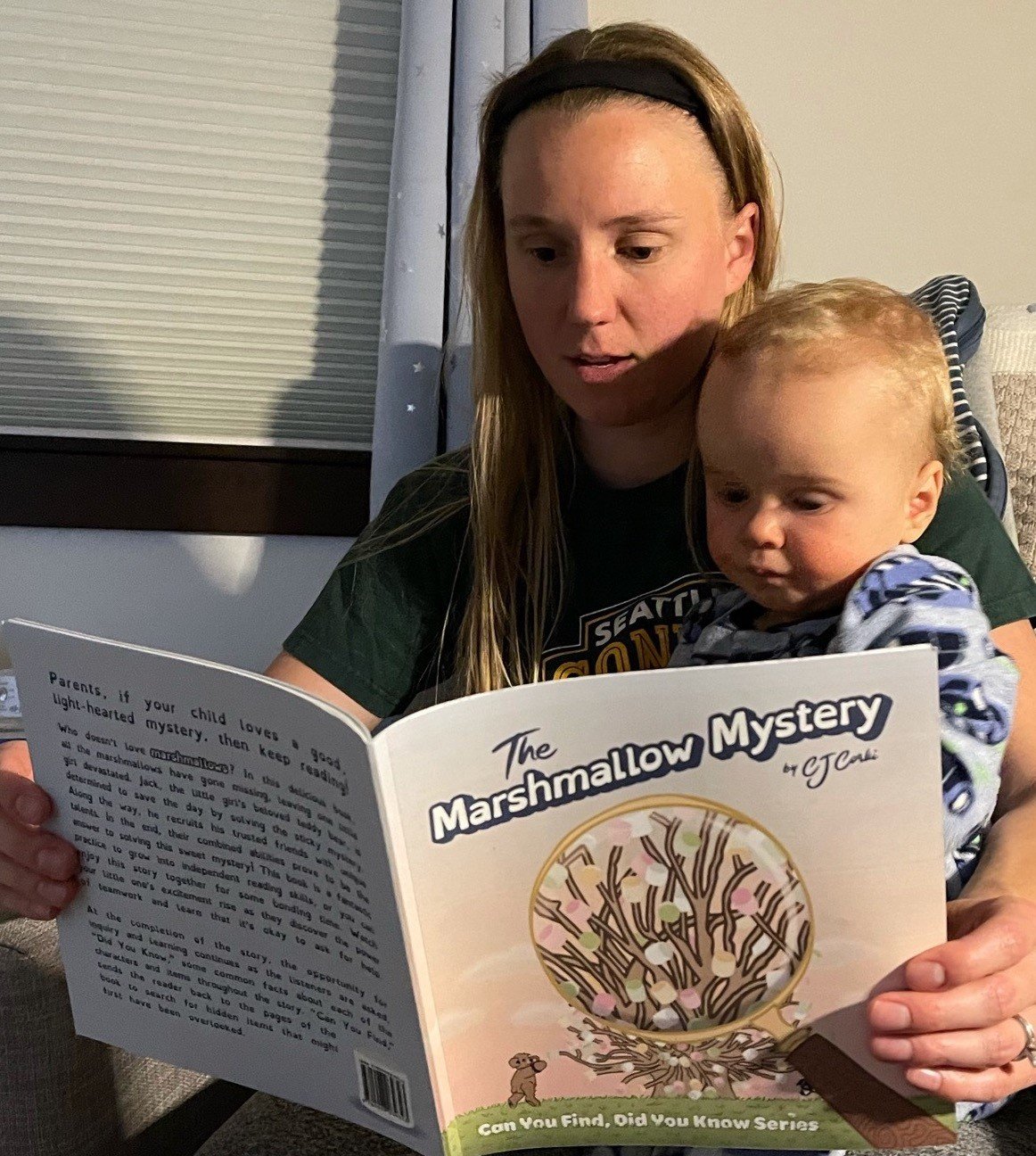
No—any picture book will do. That said, pages with rich art or simple science facts (think “Did You Know?” style) are perfect SPARK fuel. If you want an easy place to start, our own titles—The Marshmallow Mystery, Don’t Fear the Monster, and The Dinosaur Discovery—were written with these prompts in mind (friendly plug!).
How do we keep both homes aligned?
Use the text handoff. It takes ten seconds and creates a bridge. Save a few templates in your notes app so it’s always easy.
Closing (with a small nudge)
Every family’s evenings look a little different, but the heart of this ritual stays the same: one page, one question, one moment you both look forward to. Keep it short, keep it warm, and let kids do the talking—curiosity grows long before fluency. If a night goes sideways, smile and try again tomorrow. Traditions are built quietly, one joyful read-aloud at a time. Tonight, pick a page and ask one SPARK question—then share your favorite child quote in the comments or tag @cjcorki so other grands and parents can try it.
If you’d like to keep in touch and see the stories we write for families like yours, you can find our CJ Corki books and updates here: CJ Corki.